Solar Street Light Charging Time and Working Hours: A Practical Guide for B2B Buyers
Solar street light charging time and working hours are two of the most decisive factors when evaluating a project or procurement specification. Buyers need to know how long a fixture must receive sunlight before it can deliver reliable illumination, and how many hours it will operate through the night.
The short answer is that most well-designed solar street lights require between 4 and 7 peak sun hours for a full charge, and typically deliver 8 to 12 hours of runtime per night. However, actual performance depends on system configuration, battery capacity, LED wattage, geographic location, and seasonal conditions.
This guide explains the variables behind charging time and working hours, what specifications matter, and which questions importers, distributors, and project buyers should ask suppliers before committing to a purchase.
What Determines Solar Street Light Charging Time
Charging time is not a fixed number printed on a datasheet. It is the result of several interacting factors, most of which can be controlled through proper system design.
Solar Panel Wattage and Efficiency
The solar panel is the primary input device. Higher-wattage panels capture more energy in the same period of sunlight. Panel efficiency also matters: monocrystalline panels generally convert sunlight to electricity more effectively than polycrystalline alternatives, particularly in lower-light conditions.
For a correctly sized system, the panel should generate enough energy during the day to fully recharge the battery while also supplying the fixture’s rated nightly load. If the panel is undersized relative to battery capacity and LED consumption, the battery will never reach full charge, and working hours will progressively decline.
Peak Sun Hours vs. Daylight Hours
A common point of confusion is the difference between daylight hours and peak sun hours. A location may receive 12 hours of daylight but only 4 to 5 peak sun hours. Peak sun hours refer to periods when solar irradiance reaches approximately 1,000 W/m², the standard testing condition for solar panels.
Buyers should evaluate geographic conditions honestly. A project in northern Europe will have substantially different peak sun availability than one in Southeast Asia or the Middle East. Suppliers should be asked to provide charging calculations based on the actual installation region, not a generic average.
Battery Capacity and State of Charge
The battery is the energy reservoir. Lithium iron phosphate (LiFePO4) batteries are now standard in quality solar street lights because they offer higher depth of discharge, longer cycle life, and better temperature tolerance than older lead-acid or gel batteries.
A larger battery takes longer to charge fully but also provides greater autonomy. Battery capacity is measured in watt-hours (Wh) or amp-hours (Ah). When comparing products, always convert to watt-hours to make an accurate comparison: multiply voltage by amp-hours.
Charge Controller Efficiency
The charge controller manages energy flow between panel, battery, and LED. MPPT (Maximum Power Point Tracking) controllers are more efficient than PWM (Pulse Width Modulation) controllers, especially in variable weather conditions. Higher controller efficiency means more captured energy reaches the battery, reducing effective charging time.
How Long Do Solar Street Lights Work Each Night
Working hours refer to how many hours the fixture provides useful illumination between dusk and dawn. This is primarily a function of energy storage, LED consumption, and the control strategy programmed into the system.
LED Wattage and Luminous Output
The LED module’s power draw directly affects runtime. A 30W LED consumes energy at a different rate than a 60W LED, even if both are connected to identical batteries. However, wattage alone does not define lighting quality. Luminous efficacy, measured in lumens per watt, tells buyers how much visible light is produced per unit of energy consumed.
Higher-efficacy LEDs deliver the same illumination with less power, extending working hours without sacrificing brightness. Buyers should compare lumens per watt figures between products rather than focusing exclusively on wattage.
Battery Capacity in Relation to Load
The relationship between battery capacity and nightly load determines baseline runtime. A battery rated at 640 Wh paired with a 40W LED and a 10-hour operating profile would theoretically consume 400 Wh, leaving reserve capacity. If the same battery were paired with an 80W LED, runtime would drop proportionally.
Professional suppliers calculate this balance during system design. Buyers can verify by requesting the full energy balance calculation, including panel yield, battery capacity, LED consumption, and controller losses.
Lighting Profiles and Dimming Schedules
Modern solar street lights rarely operate at full brightness from dusk to dawn. Most use programmable profiles, such as:
- Full brightness for the first 4 to 5 hours after dusk
- Reduced output during low-traffic late-night hours
- Increased brightness again before dawn, if required
Time-based dimming, motion sensor activation, and adaptive lighting control can extend working hours significantly. A fixture that runs at 100% for 12 hours has very different energy requirements than one running at 100% for 5 hours, 50% for 4 hours, and 30% for 3 hours.
Rainy-Day Autonomy
Autonomy days refer to how many consecutive overcast days the system can operate without meaningful solar input. A system with 3-day autonomy should continue functioning for three nights of poor weather before depleting its battery.
This specification is critical for commercial buyers in regions with monsoon seasons or extended cloud cover. Higher autonomy requires larger batteries and correspondingly larger panels to recharge them within a reasonable window once sun returns.
Charging Time by System Type
While exact figures depend on configuration, the table below provides useful reference ranges for correctly sized systems under standard test conditions.
| System Type | Typical Panel | Battery Capacity | Approx. Full Charge Time | Typical Nightly Runtime |
|---|---|---|---|---|
| Small residential / pathway | 20W–30W | 200–400 Wh | 4–5 peak sun hours | 8–10 hours with dimming |
| Standard municipal | 40W–60W | 400–800 Wh | 5–6 peak sun hours | 10–12 hours with dimming |
| High-output / highway | 80W–120W | 800–1,500 Wh | 6–7 peak sun hours | 10–14 hours with smart control |
These figures are indicative only. Buyers must request specific calculations from suppliers.
Key Factors That Reduce Charging Efficiency and Working Hours
Even well-designed systems can underperform if installation and environmental factors are ignored.
Panel Orientation and Tilt Angle
Solar panels should face the equator in most installations: due south in the northern hemisphere, due north in the southern hemisphere. The tilt angle should approximate the installation site’s latitude. Incorrect orientation can reduce energy capture by 15 to 30 percent, directly extending charging time and shortening working hours.
Shading
Trees, buildings, signage, and even adjacent poles can cast shadows on the panel during peak sun hours. Partial shading on a single panel can disproportionately reduce output due to how cells are wired in series. Site surveys should verify that panels receive unobstructed sunlight during the primary charging window, typically 9:00 AM to 3:00 PM.
Ambient Temperature
LiFePO4 batteries perform well across a wide temperature range, but extreme heat can reduce efficiency, and extreme cold can reduce available capacity. Battery placement within the fixture matters. Quality systems use thermal management features and should be specified for the expected climate.
Panel Soiling
Dust, bird droppings, snow, and pollution accumulate on panel surfaces and reduce output. In dry or dusty regions, regular cleaning may be necessary. Some buyers overlook this maintenance requirement and then report declining working hours months after installation.
Aging and Component Degradation
All components degrade over time. Quality LiFePO4 batteries retain a high percentage of capacity after 2,000 to 3,000 charge cycles, while lower-quality cells degrade more quickly. Panel efficiency also declines gradually. Buyers should ask suppliers for degradation curves and expected performance after 3, 5, and 8 years.
How to Specify Charging Time and Working Hours in a Tender or RFQ
For project buyers and procurement professionals, clear specifications prevent disputes and underperformance. When preparing a request for quotation, include the following data:
- Installation location and average annual peak sun hours
- Required nightly operating hours
- Required brightness levels and dimming profile
- Minimum autonomy days for cloudy weather
- Expected operating temperature range
- Pole height and spacing requirements
- Local regulations or certifications required
This information allows the supplier to size the system correctly rather than offering a generic product.
How to Calculate Required Battery Capacity
For buyers who want to verify supplier calculations, a simple formula can help:
Battery Capacity (Wh) = LED Power (W) × Operating Hours per Night × Autonomy Factor
For example, a 50W LED running an average effective load of 60% for 12 hours consumes roughly 360 Wh per night. With 3 days of autonomy, the required battery capacity would be approximately 1,080 Wh. The panel must then be sized to recharge this battery within the available peak sun hours, accounting for controller and system losses.
Suppliers should be able to present this calculation in their proposal. If they cannot, that is a red flag.
Common Purchasing Mistakes Buyers Should Avoid
Relying on a single specification. A buyer who selects a product based only on wattage or price risks mismatched components. Evaluate the complete system: panel, battery, LED, controller, and enclosure.
Ignoring local climate data. A product that performs well in sunny southern Europe may fail in northern Germany or the UK. Always request location-specific calculations.
Overlooking the dimming profile. Two fixtures with the same battery and LED can have very different working hours depending on how the control profile is programmed. Confirm the profile before ordering.
Assuming all batteries are equal. LiFePO4 is the standard, but cell quality varies dramatically. Ask about the battery cell brand, cycle life rating, and warranty terms.
Focusing only on initial cost. A cheaper system with lower-quality components may deliver fewer working hours from day one and degrade faster. Total cost of ownership includes replacement, maintenance, and performance shortfalls.
Not requesting certifications. Look for relevant safety and performance certifications appropriate to the target market. Do not assume compliance; require documentation.
Why Buyers Choose SUNLUX for Solar Street Light Sourcing
SUNLUX is a professional LED and solar lighting manufacturer serving importers, distributors, contractors, and project buyers worldwide. The company’s solar street lights are designed around balanced system engineering, meaning the panel, battery, LED, and controller are matched to deliver predictable charging and runtime performance.
For buyers exploring SUNLUX solar street light solutions, the company supports OEM and ODM cooperation, allowing importers to specify custom configurations for their market. The team provides energy balance calculations based on project location, helping buyers verify charging time and working hours before placing an order.
Frequently Asked Questions
How long do solar street lights need to charge before first use?
A new solar street light should receive a full day of unobstructed sunlight before its first night of operation. This typically means 4 to 7 hours of quality sun exposure, depending on panel size and battery capacity. It is advisable to install the fixture and allow one complete charging cycle before evaluating performance.
How many hours do solar street lights stay on at night?
Most commercial solar street lights are configured to operate 8 to 12 hours per night. The exact duration depends on battery capacity, LED load, dimming profile, and weather conditions. Systems with motion sensors can operate longer by reducing output during inactive periods.
Can solar street lights work during cloudy or rainy weather?
Yes, provided the system includes a proper autonomy buffer. High-quality systems are designed with 3 to 7 days of autonomy, meaning they can operate through consecutive overcast days. After extended poor weather, the system requires adequate sunlight to return the battery to full charge.
What is the difference between peak sun hours and daylight hours?
Daylight hours refer to the period between sunrise and sunset. Peak sun hours refer to the portion of the day when solar irradiance reaches levels sufficient for meaningful energy generation, approximately 1,000 W/m². Most locations receive significantly fewer peak sun hours than daylight hours.
How can I increase the working hours of an existing installation?
The main options are upgrading the battery capacity, installing a higher-wattage or higher-efficiency panel, reducing the LED load through smarter dimming profiles, or improving panel orientation and cleaning. Any change should be reviewed by the original supplier to maintain system compatibility.
What should a supplier’s technical proposal include?
A professional proposal should include panel wattage and type, battery chemistry and capacity, LED wattage and efficacy, controller type, expected charging time at the project location, nightly runtime at specified dimming levels, autonomy days, and IP rating.
Which is better for solar street lights: MPPT or PWM controllers?
MPPT controllers generally offer higher charge efficiency, particularly in variable weather and partial shading conditions. They are the recommended choice for commercial and municipal installations where maximizing energy harvest is a priority.
Conclusion
Solar street light charging time and working hours are not fixed product attributes; they are the result of a properly matched system operating in real-world conditions. Buyers who understand the relationship between panel yield, battery capacity, LED load, and control profiles are better positioned to specify projects that perform reliably.
When evaluating suppliers, demand transparent calculations, confirm th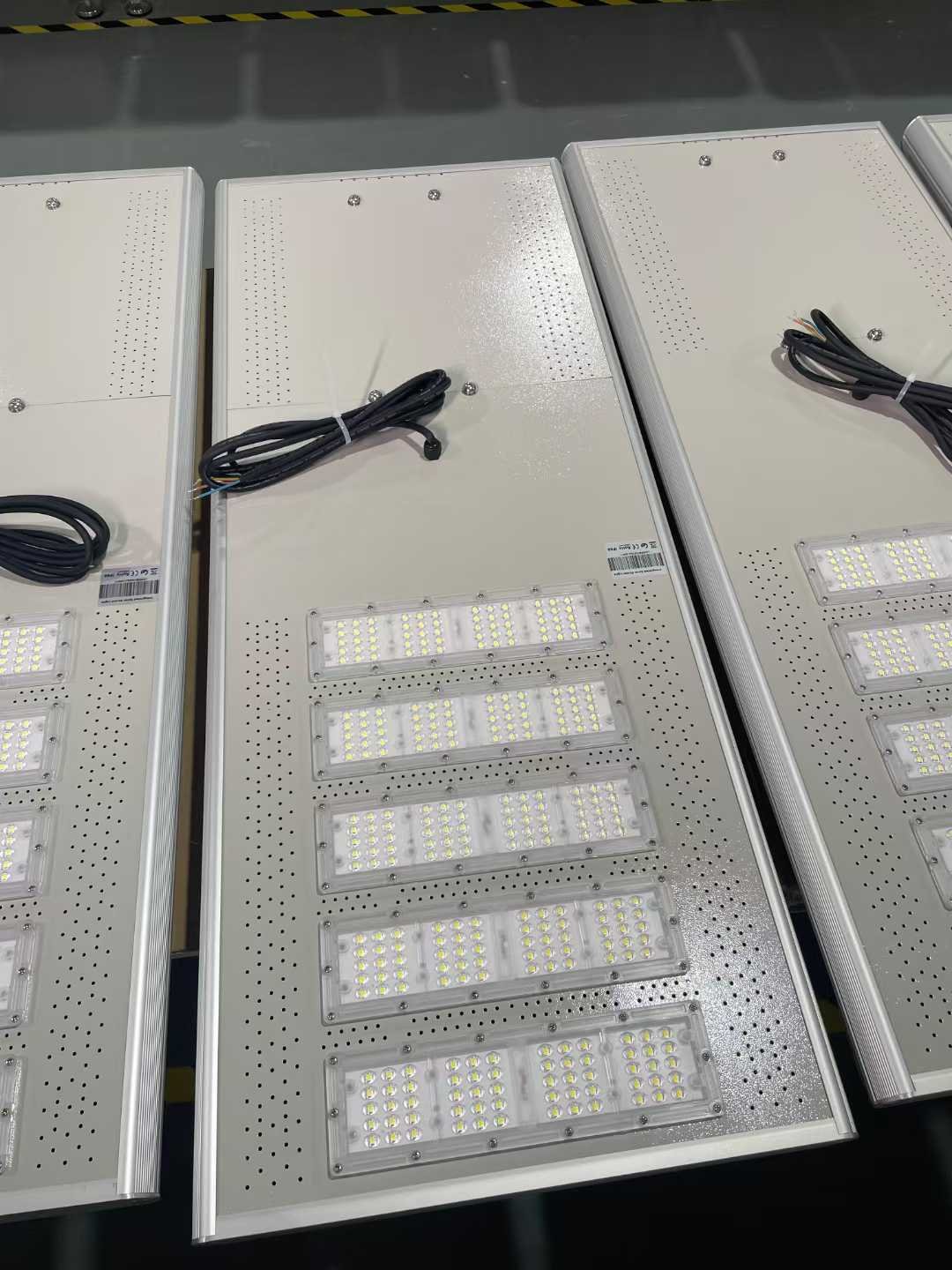 e dimming schedule, verify component quality, and ask about performance under local weather conditions. These steps are far more valuable than comparing wattage numbers alone.
Looking for solar street lights matched to your project requirements? Contact SUNLUX today to discuss specifications, request energy balance calculations, or explore OEM/ODM options for your market. The team supports importers, distributors, contractors, and project buyers with technical documentation, custom configurations, and competitive project pricing.