Landscape buyers often select garden lights by appearance, then discover uneven illumination, difficult battery access or poor pedestrian comfort after installation. A successful solar pathway lighting project starts with the path geometry, visual objective and maintenance plan, not a fixed spacing number copied from a catalogue.
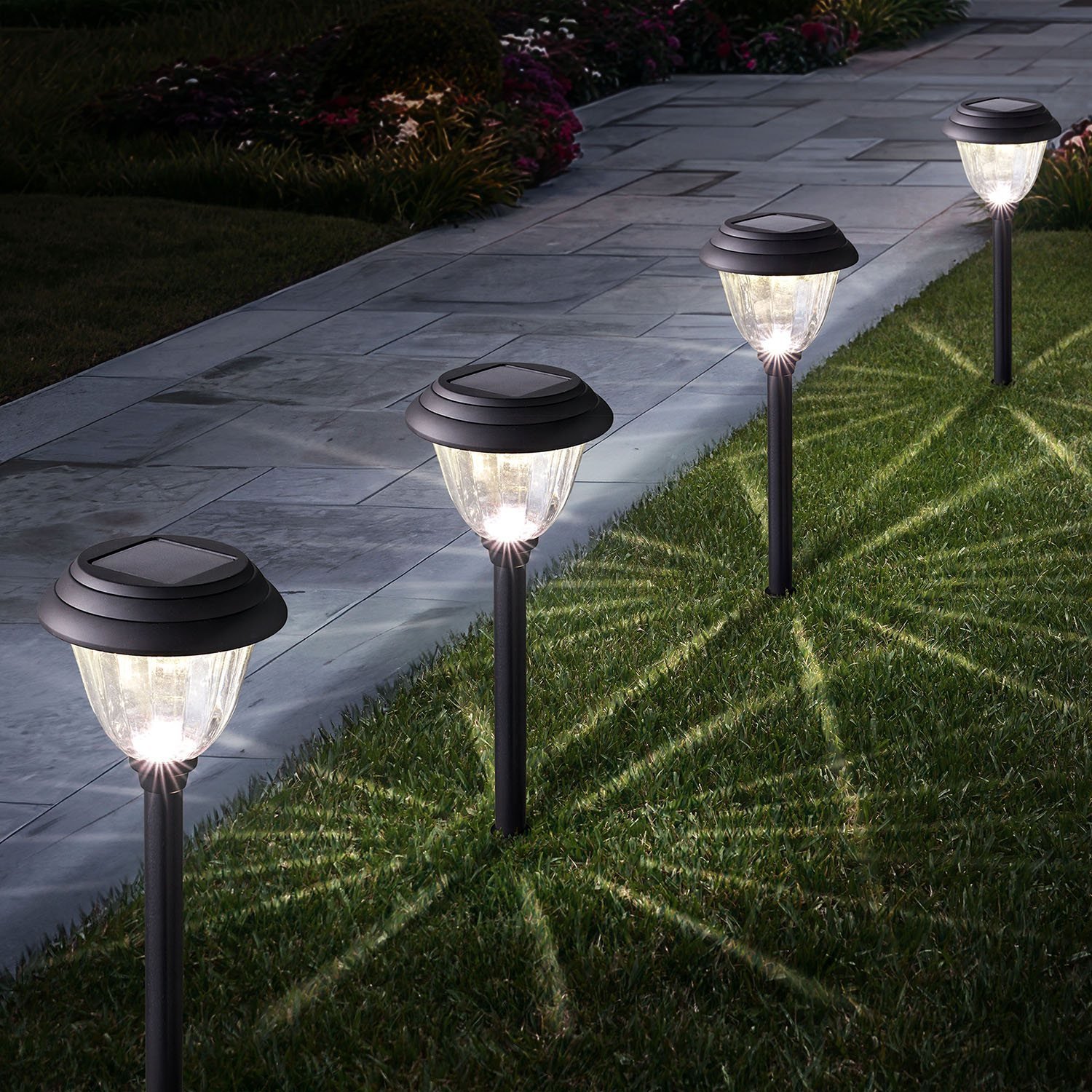
Pathway lighting is not roadway lighting
Pedestrian paths, gardens and hotel landscapes require different visual priorities from vehicle roads. The goal may include orientation, edge definition, steps and entrances, while controlling glare toward pedestrians and nearby rooms.
Ask the designer for a night-time layout and relevant local lighting criteria. Small bollards, garden luminaires and pole-mounted pathway lights serve different purposes.
Choose fixture positions using a site plan
Spacing depends on mounting height, optical distribution, vegetation, bends, slopes and obstructions. A generic rule such as one light every few meters is not reliable without photometric information.
At corners and stairs, prioritize visual cues and safe transitions. Avoid placing luminaires where garden irrigation, moving equipment or roots could damage them.
Solar exposure and battery service
A solar fixture under a dense tree canopy may charge poorly even when the garden looks sunny at midday. Check winter shading, seasonal foliage and panel orientation. Verify battery replacement access and whether spare batteries are available for the chosen model.
For a public park, maintenance staff should know how to clean the panel, check seals and diagnose charging faults without damaging landscaping.
Procurement checklist
- Path length, width, curves, steps and entrance locations.
- Target visual effect and glare constraints.
- Mounting method, corrosion resistance and vandal protection.
- Solar panel position and seasonal shading survey.
- Battery chemistry, usable energy and replacement procedure.
- Dimming, sensor operation and required nightly duration.
- Warranty scope and spare-parts availability.
How to evaluate a sample
Install a small test group at the actual site. Observe it after dusk and near the end of the operating period, including during a cloudy week. Record perceived glare, shadow patterns and access for cleaning before approving a large quantity.
Frequently Asked Questions
Can solar garden lights be installed in shade?
Partial shade may be possible for some systems, but charging and autonomy must be verified for the actual location.
Is a garden light suitable for a public road?
Not without a separate roadway lighting assessment and compliant photometric performance.
Should I use the same spacing for every park?
No. The path geometry and luminaire optics determine the layout.
Request a Project-Specific SUNLUX Quotation
SUNLUX Lighting supports project-based lighting and pole procurement. Share your site conditions, quantities, drawings or BOQ for a technical review. Email sales@sunluxledlighting.com or contact WhatsApp +8619189782897. Configuration, performance and certifications must be confirmed for the selected model.
Related SUNLUX guides: Solar street lighting procurement, Solar installation basics.