How to Choose Solar Street Lights for African Projects: A Buyer’s Guide
Selecting the right solar street lights for African infrastructure projects requires more than comparing wattage and price. Harsh sun exposure, heavy seasonal rains, dust, and inconsistent grid access mean that project buyers—importers, distributors, contractors, and municipalities—must evaluate every component carefully. A single poor procurement decision can lead to early battery failure, dim lighting, and expensive maintenance across hundreds of units.
This guide breaks down the key technical and commercial factors to consider when sourcing commercial solar street lights for African roads, industrial zones, residential estates, and public spaces.
Why Component Quality Determines Project Success
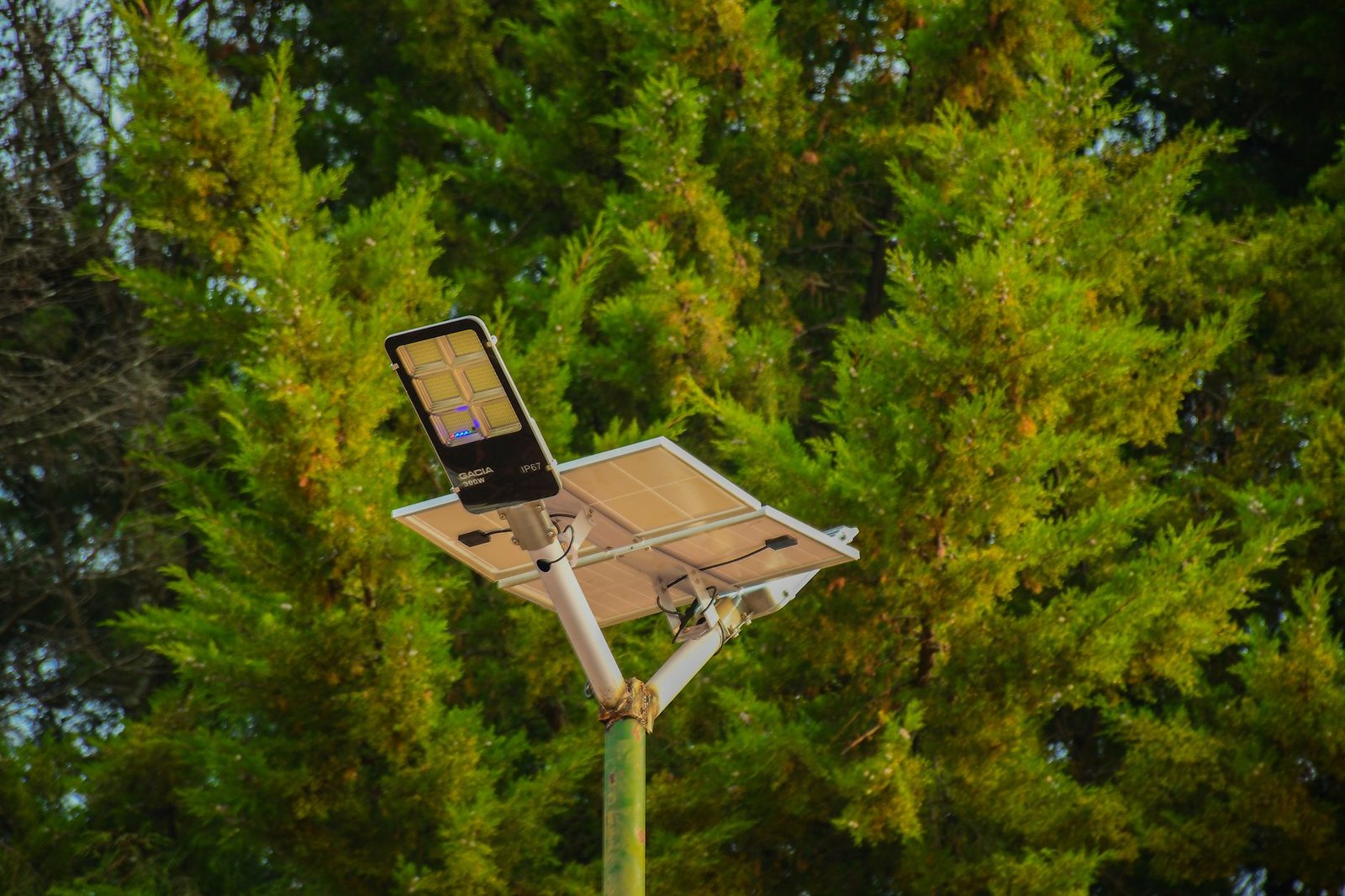
In solar lighting, the system is only as strong as its weakest part. For African conditions, three components matter most: the solar panel, the battery, and the LED module.
Solar Panel: Match Output to Real Sun Hours
Monocrystalline panels are the standard for LED solar street lights in high-temperature regions. Look for panels with an efficiency of at least 19–21%. While Africa generally receives excellent irradiation, seasonal dust and haze can reduce real-world output.
What to check:
- Panel wattage matches battery capacity and daily load
- Tempered glass with high transmittance
- Corrosion-resistant aluminum framing
- Tolerance for ambient temperatures above 45°C
LiFePO4 Battery: The Non-Negotiable Choice
For African projects, lithium iron phosphate (LiFePO4) batteries have replaced older lead-acid and gel batteries. They offer longer cycle life, better thermal stability, and safer operation in hot climates.
Key specifications for LiFePO4:
- Minimum 2,000–3,000 charge cycles at 80% depth of discharge
- Built-in Battery Management System (BMS) with overcharge, over-discharge, and temperature protection
- Operating range from -10°C to 60°C
- Capacity sized for required rainy-day backup
A common failure in cheap imports is a mismatched battery that cannot sustain the specified lighting hours after a few cloudy days.
LED Efficiency: Lumens per Watt Matter More Than Watts
Do not buy solar street lights based on total wattage alone. A 60W fixture with 180 lm/W efficiency will outperform a 100W fixture with 100 lm/W. High-efficacy LEDs reduce the required panel and battery size, lowering overall cost per pole.
Aim for LED modules delivering 160–200 lumens per watt using branded chips such as Lumileds, Philips, or Seoul Semiconductor. Also confirm that the driver is designed for solar DC systems, not converted AC drivers, which waste energy.
Sizing the System for African Applications
Proper sizing prevents both under-lit roads and over-spec’d budgets. Use the following baseline ranges for common project types:
| Application | Pole Height | Recommended LED Wattage | Typical Lighting Hours |
|---|---|---|---|
| Residential streets | 4–6 m | 20–40W | 10–12 hours |
| Secondary roads | 6–8 m | 40–80W | 10–12 hours |
| Main roads & highways | 8–10 m | 80–120W | 11–12 hours |
| Industrial zones & parking | 8–12 m | 100–200W | 10–14 hours |
Rainy-Day Backup: Plan for the Worst Week
African regions with distinct rainy seasons, such as West Africa’s June–September monsoon or East Africa’s long rains, require systems that keep working through consecutive overcast days. Specify at least 3–5 days of autonomy for most municipal projects, and up to 7 days for remote installations where maintenance access is limited.
This backup requirement directly affects battery capacity. For example, a 60W LED running 12 hours consumes 720Wh per night. With 4 days of autonomy, the battery should provide roughly 2.9kWh of usable capacity—not nominal rating—before accounting for depth of discharge limits.
Pole Height and Spacing
Pole height should match road width and required illumination uniformity. As a rule of thumb:
- 6 m poles: space 25–30 m apart for secondary roads
- 8 m poles: space 30–35 m apart for main roads
- 10–12 m poles: space 35–40 m apart for highways
Always request IES or Dialux simulation files from your supplier to verify lux levels and uniformity ratios before committing to a pole layout.
Environmental Protection: IP Rating and Materials
Coastal African projects, such as those in Lagos, Mombasa, or Dakar, face salt spray and high humidity. Inland desert regions face fine dust and sand abrasion.
Minimum requirements:
- IP65 for the LED fixture and battery compartment
- IP67 for underground or buried battery boxes where applicable
- Polyester powder-coated aluminum or galvanized steel poles with anti-corrosion treatment
- Stainless steel fasteners to prevent rust
For solar street light for Africa projects near the coast, request marine-grade coating or anodized finishes to extend service life beyond 10 years.
Installation and Logistics Considerations
African importers and contractors face unique site challenges. Remote locations, limited heavy equipment, and varying soil conditions affect installation cost and speed.
Look for systems that offer:
- Pre-wired, plug-and-play connections between panel, battery, and LED
- Split-type designs where the battery is accessible at the pole base for easy replacement
- Clear bilingual or illustrated installation manuals
- Spare parts availability from the manufacturer
All-in-one integrated designs are popular for residential and small commercial use, but split-type systems remain easier to maintain on large municipal deployments.
Supplier Selection: What to Look For
Choosing the right solar street light supplier is as important as the product itself. A manufacturer with experience in African markets understands documentation, logistics, and after-sales expectations.
Evaluate suppliers on these criteria:
- Project references in Africa with verifiable case studies
- In-house testing for battery cycle life, waterproofing, and lumen output
- Custom design capability for pole heights, wattages, and light distribution
- Warranty terms—minimum 3 years for the full system, 5 years for LiFePO4 batteries, and 10 years for panels
- Spare parts and technical support reachable from your time zone
Why SUNLUX Is a Reliable Partner for African Projects
For buyers seeking a dependable solar street light manufacturer with proven African project experience, SUNLUX offers a strong combination of engineering quality and commercial flexibility.
SUNLUX manufactures commercial solar street lights with LiFePO4 batteries, high-efficiency LED modules, and monsoon-rated backup configurations. Their systems support pole heights from 4 to 12 meters and can be customized for specific road widths, lighting hours, and autonomy requirements.
As a full-service solar street light supplier, SUNLUX provides:
- Dialux lighting simulations for project planning
- Pre-shipment inspection reports and test data
- Warranty support with replacement part logistics
- OEM and branding options for distributors
For African importers, contractors, and municipalities planning road, estate, or industrial lighting tenders, partnering with a manufacturer that understands your operating environment reduces risk and simplifies project execution. Contact SUNLUX to discuss your next solar street light for Africa deployment with a tailored quote and technical proposal.