How Many Lumens Does a Street Light Need? A Practical Guide for B2B Buyers
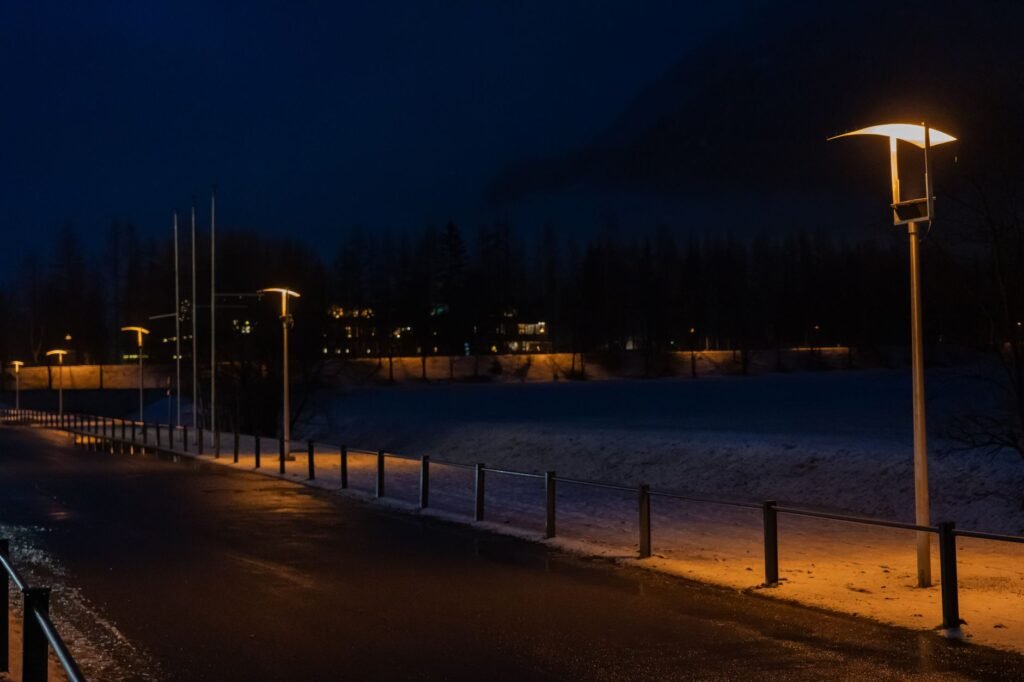
If you are sourcing street lighting for a municipal project, a commercial development, or a wholesale order, the question of “how many lumens is a street light” is one of the first technical points you need to resolve. The short answer is that most standard road and residential street lights fall between 2,500 and 15,000 lumens, but the correct figure for your project depends on road classification, pole height, mounting spacing, and the required lighting uniformity.
Choosing the wrong lumen output leads directly to project failure: overlit areas waste energy and create light pollution, while underlit roads create safety risks and failed inspections. This guide explains how street light lumens are determined, what factors affect the required output, and how to specify the right LED street light for your application.
Understanding Street Light Lumens
Lumens measure the total visible light emitted by a fixture. Unlike watts, which measure energy consumption, lumens describe actual light output. In the LED era, lumens per watt (lm/W) has become the key efficiency metric for comparing fixtures.
When buyers ask “how many lumens are street lights,” they are usually trying to determine:
- Whether a given fixture meets local lighting standards
- How many fixtures they need for a specific road length or area
- Whether a proposed replacement matches or improves on existing lighting
- What solar street light configuration is needed for off-grid installations
The answer is never a single number. It is always tied to application context.
Typical Lumen Ranges by Application
The table below provides general reference ranges based on common project categories. These are starting points, not specifications. Always verify requirements against local standards such as EN 13201 in Europe, IES RP-8 in North America, or equivalent national codes.
| Application | Typical Pole Height | Common LED Street Light Lumen Range |
|---|---|---|
| Residential side streets, pedestrian paths | 4–6 m | 2,500–5,000 lm |
| Collector roads, residential main streets | 6–8 m | 5,000–8,000 lm |
| Arterial roads, commercial districts | 8–10 m | 8,000–12,000 lm |
| Highways, major intersections, industrial zones | 10–14 m | 12,000–20,000+ lm |
| Parking lots, logistics yards | 6–10 m | 4,000–12,000 lm depending on layout |
| Pathways, parks, bike lanes | 3–5 m | 1,500–3,000 lm |
These ranges reflect common practice, but the actual specification must be calculated based on the factors below.
Key Factors That Determine Required Lumens
1. Road Classification and Usage
The most important variable is what the road is used for. A quiet residential cul-de-sac has very different lighting requirements than a highway interchange. Road classification standards define required illuminance levels (measured in lux) and uniformity ratios. Higher traffic volumes, higher speed limits, and the presence of pedestrians or cyclists generally increase the required lumen output.
2. Pole Height and Mounting Geometry
Lumens alone do not determine how much light reaches the ground. Illuminance (lux) depends on both lumen output and mounting height — the higher the pole, the more lumens are needed to achieve the same ground-level brightness.
As a general rule:
- 4–6 m poles: suitable for lower-output fixtures (2,000–6,000 lm)
- 6–8 m poles: mid-range output (5,000–10,000 lm)
- 8–12 m poles: higher output (10,000–18,000 lm)
- 12 m+ poles: high-output fixtures with precision optics (15,000 lm+)
3. Spacing Between Poles
Wider spacing requires higher lumen output per fixture to maintain uniform coverage. Conversely, closely spaced fixtures can use lower outputs. A professional lighting design will calculate the spacing-to-mounting-height ratio and specify optics accordingly.
4. Fixture Efficiency and Optical Distribution
Two LED street lights with the same lumen output can perform very differently depending on lens design and fixture efficiency. Well-designed optics direct light precisely onto the roadway, minimizing waste and improving uniformity. When comparing fixtures, ask for IES photometric files and check the delivered lumens, not just raw LED lumens.
LED Street Light Lumens vs Traditional Light Sources
One reason the question “how many lumens is a street light” causes confusion is that buyers often compare LED fixtures to legacy technologies. A 250W high-pressure sodium (HPS) fixture typically produces around 25,000–30,000 lumens. An LED replacement achieving the same effective road illumination might be rated at significantly lower total lumens because its superior optical control directs more light where it is needed.
Key comparison points:
| Metric | HPS / Metal Halide | LED |
|---|---|---|
| Efficacy | 80–120 lm/W | 140–190+ lm/W |
| Optical control | Poor, significant spill light | Excellent, precise distribution |
| Lumen maintenance | Rapid degradation | Slow degradation, stable output |
| Useful light on road surface | Lower percentage of total lumens | Higher percentage of total lumens |
For B2B buyers, the practical implication is clear: do not specify LED street lights based on wattage equivalents or raw lumen parity with legacy sources. Instead, specify based on the lighting design outcome — required lux levels, uniformity, and glare ratings.
Solar Street Lights: How Lumens Affect System Sizing
For off-grid and solar-powered projects, lumen output has a direct impact on system configuration and cost. SUNLUX solar street light solutions are typically configured based on required lumen output, daily operating hours, and local solar conditions.
How Lumen Requirements Drive Solar System Design
- Higher lumens = higher LED wattage = larger solar panel needed to recharge the battery each day.
- Battery capacity must support the LED load for the required nightly operating duration plus rainy-day autonomy.
- LiFePO4 batteries are commonly used in quality solar street lights because they offer longer cycle life and better thermal stability than older lithium or lead-acid chemistries.
- Working hours and dimming profiles matter as much as peak lumens. Many solar street lights operate at reduced output during low-traffic nighttime hours through programmable dimming or motion sensing, which extends battery life and reduces panel size.
Questions to Ask When Sourcing Solar Street Lights
- What is the fixture’s actual delivered lumen output, not just the LED chip rating?
- What is the system’s operating profile (full-power hours, dimming schedule)?
- How many days of autonomy is the battery sized for?
- What is the solar panel wattage and conversion efficiency?
- What kind of battery chemistry is used, and what is its expected cycle life?
- What IP rating does the fixture have for weather resistance?
How to Specify the Right Street Light Lumens
Step 1: Determine the Lighting Class
Start with the applicable road or area classification. Reference local standards to identify the required illuminance (lux), uniformity ratio, and glare limits. If you cannot access formal standards, work with your supplier’s engineering team to confirm the appropriate class.
Step 2: Confirm Mounting Height and Spacing
Provide your supplier with pole height, pole spacing, road width, and mounting arrangement (single-sided, double-sided, staggered, or central median). These inputs allow the supplier to run photometric calculations and recommend the appropriate lumen package.
Step 3: Request Photometric Data
Reputable manufacturers should provide IES or EULUMDAT files for their fixtures. These files allow your lighting designer or the supplier’s engineers to simulate the installation and verify that the proposed LED street light lumens meet the specified lux and uniformity requirements.
Step 4: Verify Lumen Maintenance
Check the fixture’s L70 or L90 rating — how long the LED will operate before output drops to 70% or 90% of its initial lumens. A quality LED street light should specify an L90 rating of at least 50,000 hours under its rated operating conditions.
Step 5: Evaluate the Full Cost of Ownership
Rather than comparing fixtures on price alone, B2B buyers should consider:
- Energy consumption per year at the specified operating profile
- Expected service life and replacement intervals
- Maintenance accessibility and spare part availability
- Warranty terms and the manufacturer’s track record
Common Mistakes Buyers Should Avoid
1. Specifying Wattage Instead of Lumens
Legacy buying habits die hard. Many buyers still ask for a “150W street light” without specifying the required lumen output or lighting performance. Two 150W LED fixtures can differ by 30% or more in delivered lumens and dramatically in optical performance. Always specify the required lumen output and lighting class first.
2. Ignoring Optical Design
High lumens do not compensate for poor optics. A fixture with 15,000 lumens and an inefficient lens can deliver worse road illumination than a 10,000-lumen fixture with precision optics. Ask for photometric files and review the lighting distribution pattern.
3. Choosing the Cheapest Fixture
Low-cost fixtures often use lower-quality LED chips that degrade faster, inferior drivers that fail early, and housings that corrode. For projects with a 10–20 year expected lifespan, initial savings evaporate quickly. Consider total cost of ownership.
4. Failing to Account for Environmental Conditions
Coastal installations require fixtures with enhanced corrosion resistance. High-temperature environments require effective thermal management to maintain lumen output and LED lifespan. Dusty or humid conditions demand appropriate IP ratings. Verify that the fixture is designed for your specific deployment environment.
5. Overlooking Control and Dimming Capabilities
Modern LED street lighting systems can integrate with smart controls, motion sensors, and centralized management platforms. Even if controls are not part of the initial phase, specifying fixtures with dimming capability (0–10V, DALI, or wireless) provides future flexibility.
FAQ: Street Light Lumens
How many lumens is a standard residential street light?
Most residential street lights fall between 2,500 and 5,000 lumens, typically mounted on 4–6 meter poles. The exact number depends on pole spacing, road width, and local lighting standards.
How many lumens do I need for a highway street light?
Highway and major arterial lighting typically requires 12,000 to 20,000+ lumens per fixture, depending on pole height (10–14 m), road width, traffic speed, and required uniformity. Always reference the applicable lighting standard, such as IES RP-8 or EN 13201.
Can I replace a 250W HPS street light with a 100W LED?
In many cases, yes. A high-quality 100W LED street light producing 14,000–17,000 lumens with good optics can often match or exceed the effective road illumination of a 250W HPS fixture. However, this should be confirmed through photometric analysis for your specific road geometry.
What happens if I choose too many lumens?
Overlighting wastes energy, increases costs, and contributes to light pollution. It can also create glare, which is dangerous for drivers and pedestrians. In some jurisdictions, overlit installations fail to comply with lighting regulations.
What is the difference between LED lumens and delivered lumens?
LED lumens refer to the raw output of the LED chips. Delivered lumens account for optical losses, thermal effects, and driver efficiency. The delivered lumen figure is what actually reaches the road surface. Always ask for delivered lumen data and photometric files.
How does pole height affect the lumens I need?
Higher poles require more lumens to achieve the same ground-level illuminance. As a rough approximation, doubling the mounting height requires approximately four times the lumen output to maintain equivalent lux levels. This is why pole height and lumen output must be specified together.
How many lumens do solar street lights typically produce?
Solar street lights commonly range from 1,500 to 12,000 lumens depending on panel size, battery capacity, and application. Higher-output solar systems require larger panels and batteries, which increases cost and weight. For most off-grid road and pathway applications, 2,000–8,000 lumens is typical.
Conclusion
The question “how many lumens is a street light” does not have a single answer — and that is exactly why B2B buyers need to approach it through application-specific lighting design rather than generic product ratings. Correct lumen specification depends on road class, pole height, spacing, optics, and environmental conditions. For solar projects, lumen output also drives panel sizing, battery capacity, and overall system cost.
The most reliable approach is to work with a manufacturer that can provide photometric analysis, technical documentation, and project-specific recommendations. Whether you are sourcing standard LED street lighting or solar street lights for off-grid applications, obtaining accurate lumen and lighting design data before ordering is the difference between a compliant installation and an expensive rework.
Need help specifying street light lumens for your project? SUNLUX is a professional LED and solar lighting manufacturer offering OEM/ODM support, photometric calculations, and project-specific quotations for importers, distributors, contractors, and engineering companies. Contact our team to discuss your requirements, request IES files, or receive a tailored quotation.