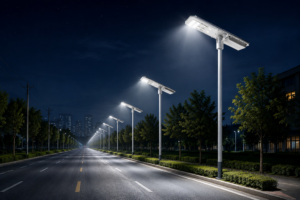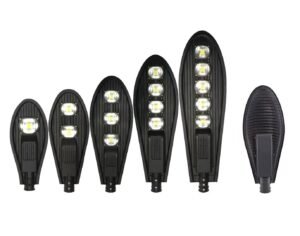
LED roadway lighting has become the cornerstone of modern urban infrastructure, replacing outdated high-pressure sodium and metal halide systems in cities around the world. As municipalities seek ways to reduce energy costs, improve nighttime visibility, and meet sustainability targets, the shift toward public lighting LED technology has accelerated dramatically. This guide explores why LED street lights are transforming roadways, what makes them more effective than legacy systems, and how to choose the right led street light fixture for any project.
Why LED Roadway Lighting Outperforms Traditional Systems
The fundamental advantage of LED roadway lighting lies in its efficiency. Traditional street lamps waste a significant portion of their energy output as heat, emitting light in all directions rather than focusing it on the road surface. LEDs, by contrast, are directional by nature, delivering concentrated illumination precisely where it is needed. This translates to energy savings of 50 to 70 percent compared to legacy fixtures, a difference that compounds quickly across an entire city grid.
Beyond efficiency, LEDs offer superior color rendering. Drivers and pedestrians perceive details more clearly under the cooler, whiter light produced by modern LED street lights, improving reaction times and reducing accident risk. The light quality also enhances CCTV footage, supporting public safety initiatives that depend on clear video evidence.
Lifespan is another decisive factor. A quality led street light fixture typically operates for 50,000 to 100,000 hours before significant degradation, compared to roughly 20,000 hours for high-pressure sodium lamps. Fewer replacements mean lower maintenance costs, less disruption from bucket trucks, and reduced landfill waste.
The Safety Case for Public Lighting LED Upgrades
Visibility is directly linked to roadway safety. Studies consistently show that improved street lighting reduces nighttime crashes, particularly those involving pedestrians and cyclists. LED roadway lighting improves uniformity across the road surface, eliminating the dark patches and hot spots common with older technologies. Uniform illumination helps drivers detect obstacles, lane markings, and crossing pedestrians earlier.
Adaptive control systems take this further. Many modern LED street lights pair with motion sensors, dimming schedules, or networked controls that adjust brightness based on traffic volume and time of night. A road can remain brightly lit during peak hours and dim to a safe but lower level at 3 a.m. when traffic is sparse. This smart functionality stretches energy savings even further while maintaining safety where it matters most.
Communities also report reduced light trespass and glare when old cobra-head fixtures are replaced with properly shielded LEDs. Lower glare means less discomfort for drivers and residents alike, addressing one of the most common complaints about outdated street lighting.
Choosing the Right LED Street Light Fixture
Selecting the correct led street light fixture involves more than picking the highest lumen count. Several factors determine optimal performance:
Lumen output and distribution. Fixtures are rated by lumens and by photometric distribution patterns. A Type II or Type III distribution suits most standard roadways, while Type V works for intersections and parking areas. Matching the distribution to the application prevents wasted light and dark zones.
Color temperature. Most roadway applications use 3000K to 5000K. Warmer temperatures reduce blue-light concerns and ecological impact, while cooler temperatures can improve visual acuity on high-speed roads. Many cities now specify 3000K to balance safety and environmental considerations.
Ingress protection and durability. Look for fixtures rated IP66 or higher and built with die-cast aluminum housings to withstand weather, vibration, and temperature swings. Surge protection is essential in areas prone to lightning or grid instability.
Control compatibility. If smart city integration is planned, choose fixtures with NEMA sockets or built-in photocells and dimming drivers that support networked control protocols.
Warranty and certifications. Reputable manufacturers offer five- to ten-year warranties and products tested to industry standards such as DLC, UL, and CE. Certification ensures the fixture delivers the performance and longevity promised.
Installation, Maintenance, and Long-Term Value
Upgrading to LED roadway lighting usually involves minimal infrastructure change. Most LED fixtures are designed as direct replacements for existing poles and arms, reducing installation time and cost. Once installed, maintenance demands drop sharply. Because LEDs have no filaments or fragile glass components, they resist vibration and temperature shock far better than traditional bulbs.
The financial case extends beyond electricity. Reduced maintenance labor, fewer emergency repairs, and potential utility rebates often bring payback periods within three to six years. Over a twenty-year horizon, the total cost of ownership for LED street lights is dramatically lower than for legacy systems.
Municipalities also gain environmental benefits. Lower energy consumption reduces carbon emissions, and the absence of mercury in LEDs eliminates a hazardous waste stream. Dark-sky-friendly designs further minimize light pollution, protecting wildlife and preserving the night sky.
The Future of Street Lighting
Street lighting is evolving from a static utility into an intelligent network. Future led street lights will increasingly host sensors for air quality, traffic counting, and parking availability, while serving as platforms for emergency alerts and public Wi-Fi. As cities embrace these capabilities, choosing adaptable, standards-compliant LED roadway lighting today ensures the infrastructure can grow with tomorrow’s needs.
For anyone planning a roadway project, whether a single parking lot or a citywide retrofit, the evidence is clear: LED roadway lighting delivers brighter, safer, and more sustainable streets. Investing in quality public lighting LED solutions is no longer a question of if, but how quickly the transition can be completed.