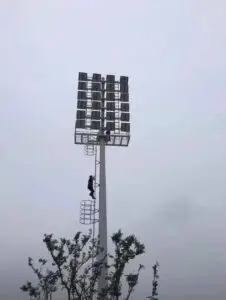
A street lighting pole can be manufactured accurately and still fail to fit the foundation if its base flange and anchor-bolt layout do not match the civil works. For international projects, the pole supplier and foundation contractor must agree on one controlled drawing before concrete is poured.
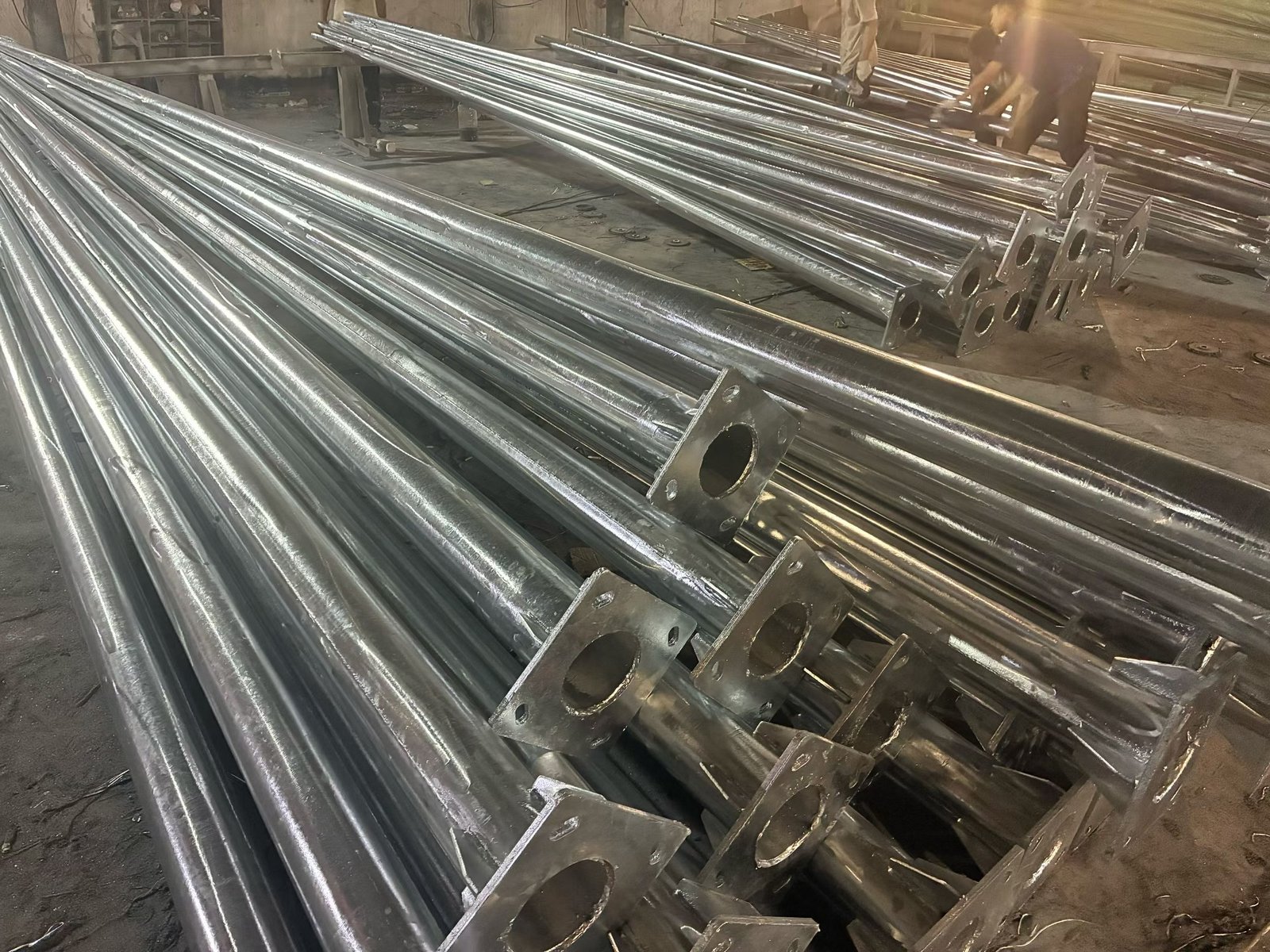
What the base flange does
The base flange transfers loads from the steel pole to the anchor bolts and foundation. Its dimensions, thickness, bolt-circle pattern and weld details must come from the structural design. A visually similar flange from another project is not a safe substitute.
The design should account for the pole, arms, luminaires, wind effects and applicable structural standards. Confirm whether grout, leveling nuts or other installation details are required.
Anchor bolts are engineered components
Anchor bolt quantity, diameter, grade, length and embedment depend on calculated loads and foundation design. The site soil report and concrete design are relevant. Do not select bolts solely by pole height or copy a competitor catalogue detail.
For export orders, include a bolt-positioning template with the correct pattern and clear identification. The template should be checked against the flange before shipment.
Drawing coordination with the civil contractor
The drawing package should show pole centerline, bolt spacing, orientation, flange opening, cable duct position and ground level. Clarify which party supplies anchor bolts and which party sets them in concrete.
If the project has different pole heights or arm arrangements, identify each foundation type by code. A mixed container shipment without clear labels can lead to costly field errors.
Factory inspection points
- Check bolt-hole diameter and spacing against the approved drawing.
- Inspect flange flatness and weld quality under the agreed plan.
- Verify anchor-bolt grade, dimensions, thread protection and nuts.
- Confirm galvanizing or coating treatment and any masked threads.
- Trial-fit a template or sample bolt set when feasible.
- Pack and label each pole type and its matching foundation accessories.
Avoiding delays at installation
Require a drawing revision register and a final approved-for-production file. Any change to pole height, arm outreach, luminaire weight or site wind conditions should trigger a review of structural and foundation details.
Frequently Asked Questions
Are anchor bolts always included with a pole?
No. The quotation must state whether bolts, nuts, washers and templates are included.
Can the same flange fit different pole heights?
Only if the approved structural design permits it; height alone is not enough to decide.
Can holes be enlarged on site?
Do not modify a structural flange without written engineering approval.
Request a Project-Specific SUNLUX Quotation
SUNLUX Lighting supports project-based lighting and pole procurement. Share your site conditions, quantities, drawings or BOQ for a technical review. Email sales@sunluxledlighting.com or contact WhatsApp +8619189782897. Configuration, performance and certifications must be confirmed for the selected model.
Related SUNLUX guides: Pole manufacturing and galvanizing, High mast accessory checklist.