A motion sensor can help an off-grid solar street light reduce energy use, but only if the dimming profile suits the road and the people using it. A tender that says ‘PIR sensor included’ leaves critical questions unanswered: detection geometry, standby brightness, response time and the effect on battery autonomy.
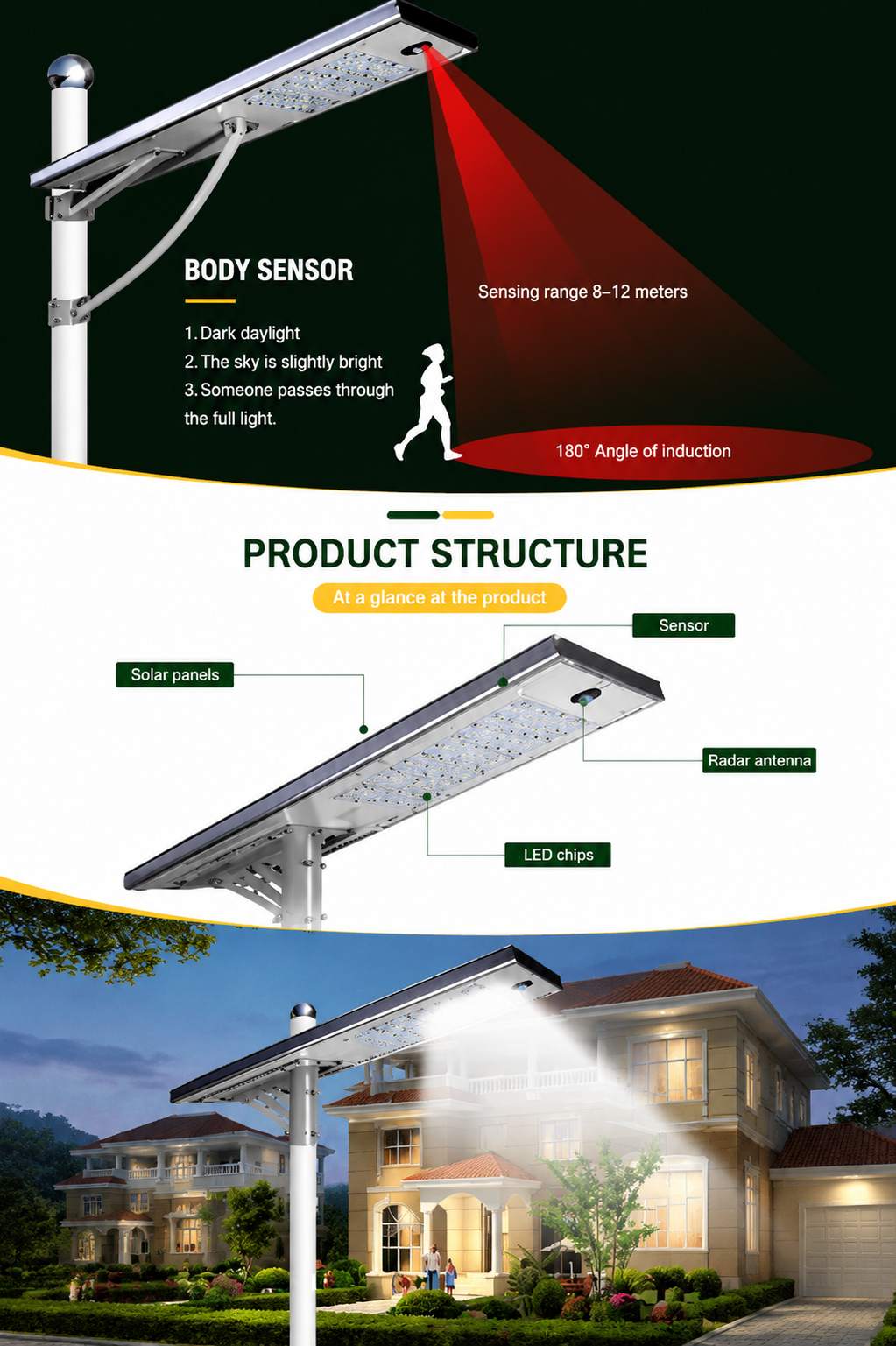
PIR is not the same as radar
A passive infrared (PIR) sensor detects changes in infrared radiation within its field of view. Microwave or radar sensors use a different detection method. Buyers should request the actual sensor type and tested detection conditions, not assume the technologies behave identically. Temperature, mounting height, orientation and moving objects can influence performance.
Write the nightly lighting profile explicitly
A specification might require full output during early evening, reduced output after low-traffic hours and a temporary boost when movement is detected. That is an example schedule, not a universal recommendation. Define each period, dimming percentage, trigger duration and return-to-dim delay. The engineer must confirm minimum light levels for the road class and local safety requirements.
Calculate energy from the real profile
Battery sizing should use the expected watt-hours consumed during the whole night, including standby power, driver losses and sensor operation. A profile with frequent triggers can consume more than a spreadsheet that assumes the light remains dim most of the night. Request a conservative traffic-use scenario and a worst-case energy budget for the selected site.
Avoid unsafe dark gaps between poles
A sensor-triggered light should not leave approaching road users moving through dark sections. Consider overlapping detection zones, appropriate standby illumination and any networked or group-triggering requirement. Rural roads, pedestrian paths and high-speed traffic routes may need different operating rules. The final dimming strategy should be approved by the project lighting designer.
Commission the sensor instead of trusting the brochure
At site acceptance, check detection at the installed height and orientation, trigger delay, duration, dimming transitions, day/night switching and manual override. Record the firmware settings and controller configuration. Verify that the lamp operates as specified after several days of normal use, not only in a one-minute demonstration.
Project RFQ Checklist
- PIR or radar sensor type and detection pattern
- Mounting height and sensor orientation
- Time periods and brightness levels
- Trigger delay and hold time
- Worst-case nightly watt-hour consumption
- Battery autonomy and PV recharge assumptions
- On-site functional and safety acceptance tests
FAQ
Will PIR always extend solar street light runtime?
It can reduce energy consumption, but savings depend on actual traffic and dimming settings.
Can sensor settings be changed after installation?
That depends on the controller model and access method. Request configuration details.
Is 0% standby brightness appropriate?
Not automatically. The lighting designer must assess safety and the applicable road-lighting requirements.
Send Your Drawings to SUNLUX
For a project-specific technical review and quotation, send your location, drawings, BOQ, quantities and operating requirements to sales@sunluxledlighting.com or WhatsApp +8619189782897. SUNLUX Lighting supports customized lighting products and steel pole manufacturing for B2B buyers.
Related guides: Real LED Watts and Battery Wh · Solar Charging Time.