How Many Lumens Does a Solar Street Light Need? A Practical Guide for B2B Buyers
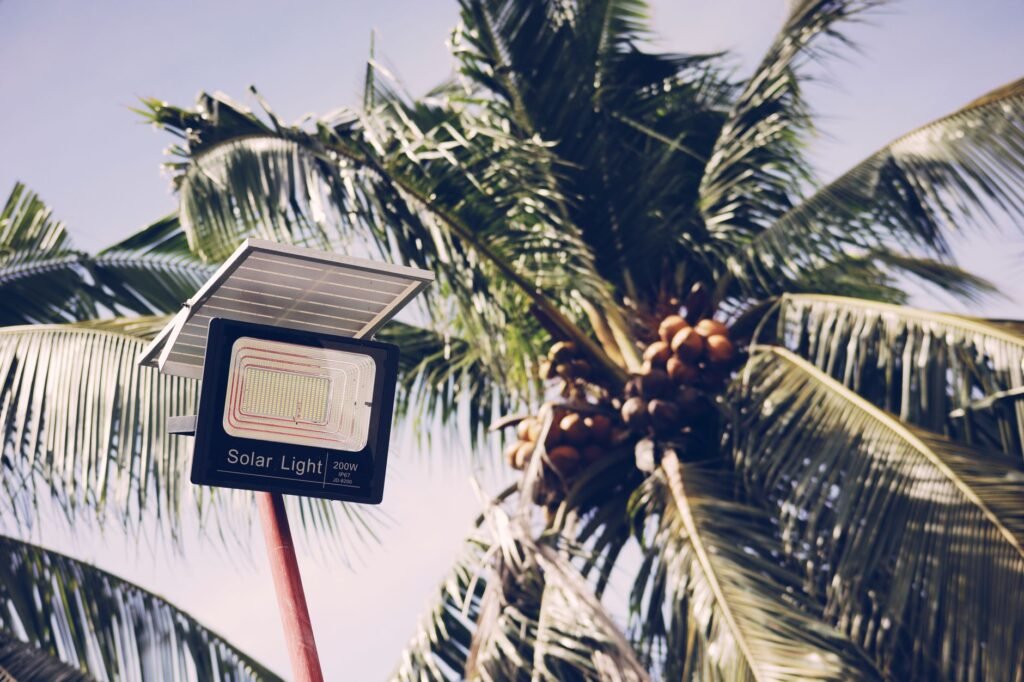
Choosing the wrong lumen output is one of the most expensive mistakes a buyer can make. Specify too few lumens, and the installation fails to meet safety or usability standards—leading to complaints, costly retrofits, or rejected projects. Specify too many, and you pay for oversized solar panels, larger batteries, and higher pole costs without any practical benefit.
This guide explains how to determine the right lumen level for solar street lighting projects across residential roads, commercial areas, industrial sites, and major traffic routes. It covers the factors that influence real-world light output, common specification errors, and what to verify with any solar street light manufacturer before placing an order.
Understanding Solar Street Light Lumens
Lumens measure the total visible light emitted by a light source. In street lighting, lumen requirements are tied directly to the application: a quiet residential lane does not need the same output as a highway interchange or a logistics yard.
However, the lumen rating of an LED module alone does not tell the full story. In solar street lighting, the usable light on the ground depends on several variables:
- LED efficiency (lumens per watt)
- Optical design and lens distribution
- Mounting height and pole spacing
- Light loss over time from heat, dust, and driver performance
This is why comparing two lights by raw lumen figures alone can be misleading. A well-designed 3,000-lumen fixture with a Type II lens at 6 meters may outperform a poorly designed 5,000-lumen fixture at the same height.
Recommended Lumen Ranges by Application
B2B buyers and project planners should start with the road classification and expected usage. The following ranges reflect common industry practice for solar street lighting projects:
| Application / Road Type | Typical Pole Height | Recommended LED Lumens | Notes |
|---|---|---|---|
| Footpaths, parks, residential walkways | 3–4 m | 800–1,500 lm | Low pedestrian traffic; uniform distribution more important than raw output |
| Residential streets, community roads | 4–6 m | 2,000–4,000 lm | Balance between coverage and energy consumption |
| Commercial streets, parking lots | 6–8 m | 4,000–8,000 lm | Higher uniformity required; consider lens type carefully |
| Main roads, industrial zones | 8–10 m | 8,000–15,000 lm | Requires larger solar panels and battery capacity |
| Highways, large intersections, ports | 10–12 m+ | 15,000–30,000 lm | Often requires substantial solar infrastructure or hybrid power |
These figures are reference points, not fixed rules. Local lighting standards, pole spacing, road width, and required uniformity ratios will all influence the final specification.
How Pole Height and Spacing Affect Lumen Requirements
Street light design is not about a single fixture—it is about the relationship between mounting height, pole spacing, and light distribution.
A taller pole requires more lumens to achieve the same ground-level illuminance (measured in lux). Light intensity decreases with distance, so doubling the mounting height can reduce ground illuminance by roughly four times—a fundamental principle of the inverse square law.
Typical relationships buyers should understand:
| Pole Height | Typical Pole Spacing | Practical Considerations |
|---|---|---|
| 4 m | 15–20 m | Suitable for low-output fixtures; narrow coverage width |
| 6 m | 20–30 m | Most common for residential and small commercial projects |
| 8 m | 25–35 m | Requires mid-to-high lumen output with controlled optics |
| 10 m | 30–40 m | High-output fixtures; solar array sizing becomes critical |
If the project requires wider-than-normal pole spacing, the lumen output must increase accordingly—or the uniformity of light will suffer, creating bright spots under the pole and dark zones between poles.
Light Distribution: Why Lens Design Matters as Much as Lumens
Two fixtures with the same lumen rating can produce very different results depending on their optical design. The lens determines how light is distributed across the road surface.
Common IESNA distribution types:
- Type I: Narrow, symmetrical distribution for walkways and narrow paths
- Type II: Wider distribution suited to residential streets and small roads
- Type III: Broad distribution for roadways and parking areas
- Type IV: Forward-throw distribution for perimeter lighting and wide areas
- Type V: Circular, symmetrical distribution for general area illumination
When specifying solar street lights, buyers should ask suppliers for IES photometric files and request a lighting simulation (Dialux or similar) for the specific pole height, road width, and spacing. A reputable manufacturer will provide this as part of technical support—not an afterthought.
SUNLUX supplies solar street lights with multiple optical options and can assist project buyers with photometric planning to verify that the selected lumen output and lens type meet the intended lighting class for the project.
Solar System Sizing: The Real Constraint on Lumens
This is where solar street lighting differs fundamentally from grid-powered lighting. A grid-connected LED fixture simply draws electricity from the network. A solar street light must generate and store every watt-hour it uses.
Higher lumen output means:
- More powerful LED modules (or more efficient ones)
- Larger solar panels to generate sufficient daily energy
- Higher-capacity batteries—typically LiFePO4 in modern systems—for overnight autonomy
- Stronger poles to support the additional weight and wind load
This interconnected relationship means lumen specifications cannot be made in isolation. Buyers should consider the full system.
Example Calculation Logic
Suppose a project requires a 6,000-lumen fixture operating 12 hours per night. At 150 lumens per watt, the LED consumes roughly 40 watts. Over 12 hours, the system needs approximately 480 watt-hours of energy per night—before accounting for system losses, driver efficiency, and dimming profiles.
A supplier must then size:
- Solar panel wattage based on daily sun hours at the installation site
- Battery capacity based on required autonomy days (typically 2–3 rainy days)
- Charge controller rated for panel and battery specifications
Buyers should always ask the supplier to provide a system sizing calculation for the specific project location. A solar street light designed for 4 peak sun hours in Southern Europe will not perform the same in Northern Europe or a monsoon region—even with identical lumen ratings.
Brightest Solar Street Light Options: What to Verify
Some buyers specifically search for the brightest solar street light available. While high-output models exist—ranging from 15,000 to 30,000 lumens or more—“brightest” is not necessarily “best.”
Before chasing maximum lumens, buyers should verify:
1. Real vs. Theoretical Lumens
The theoretical lumen rating of an LED chip is rarely the same as the delivered lumens after thermal losses, optical losses, and driver inefficiencies. Ask for the total fixture lumen output in operating conditions, not the chip manufacturer’s rating.
2. Sustained Brightness vs. Initial Brightness
All LEDs experience lumen depreciation over time. Quality fixtures specify light output after a certain operating period (often L70—the point at which output drops to 70% of initial). Cheap modules may degrade quickly, losing significant brightness within the first year.
3. Battery Discharge Depth and Dimming Profiles
Many high-lumen solar lights achieve their runtime through adaptive dimming—lowering output during low-traffic night hours. Buyers should confirm the dimming schedule and ask what the average lumen output across the full night actually is.
4. Whether the System Can Actually Deliver
The single most common problem with “bright” solar street lights is an under-sized solar array and battery. A 10,000-lumen fixture paired with an inadequately sized panel may work brilliantly for two nights, then fail on the third. Always request a system sizing report.
Common Mistakes B2B Buyers Should Avoid
Mistake 1: Buying on Lumen Specs Alone
A low-cost 8,000-lumen fixture may actually deliver less usable light on the road than a properly engineered 5,000-lumen fixture. Optical quality, driver performance, and thermal management all affect real-world results.
Mistake 2: Ignoring Local Lighting Standards
Different regions enforce different street lighting standards. Many countries follow EN 13201 (Europe) or IES RP-8 (North America), which define lighting classes based on road type, traffic volume, and pedestrian activity. Buyers should confirm which class applies to their project before finalizing lumen output.
Mistake 3: Overlooking Pole Spacing in the Design
A common procurement mistake is specifying fixtures based on assumed pole spacing, then changing the spacing on-site without adjusting the light output. This creates unsafe lighting conditions and dissatisfied end users.
Mistake 4: Prioritizing Initial Cost Over System Cost
A cheap solar street light with a low-quality LiFePO4 battery or inefficient panel may need replacement within two to three years. The total cost of ownership—including maintenance visits, battery replacements, and downtime—often exceeds purchasing a quality system initially.
Mistake 5: Not Verifying IP Rating and Build Quality
Solar street lights operate outdoors in all weather. Buyers should verify:
- IP65 or higher for the LED housing
- Corrosion-resistant materials (die-cast aluminum, stainless steel hardware)
- UV-stabilized components for exposed wiring and housings
Mistake 6: Failing to Request a Lighting Simulation
Any serious supplier should provide photometric simulation files for the specified installation. If a supplier cannot produce an IES file or support a basic luminance/illuminance simulation, that is a red flag—regardless of the lumen rating on the datasheet.
Frequently Asked Questions
How many lumens does a standard street light have?
Traditional grid-powered street lights for residential roads commonly deliver between 2,000 and 5,000 lumens depending on pole height and spacing. Solar street lights follow similar application-based ranges, though system efficiency and solar sizing are additional design constraints.
How many lumens do I need for a residential solar street light?
For residential streets with 4–6 meter poles and 20–30 meter spacing, 2,000–4,000 lumens is typical. The exact figure depends on road width, required lighting class, and whether the area is pedestrian-only or mixed vehicle-pedestrian use.
Can I use a 10,000-lumen solar street light on a 4-meter pole?
Technically yes, but it is not recommended. Excessively high lumen output at low mounting heights creates glare for pedestrians and drivers, wastes energy, and requires an unnecessarily large solar system. Match the lumen output to the mounting height and application.
What is the brightest solar street light available?
High-output solar street lights can reach 20,000–30,000 lumens or higher, but such fixtures require substantial solar arrays and battery capacity. For most commercial and municipal projects, 4,000–8,000 lumens per fixture with proper optical design delivers better practical results.
How do rainy days affect solar street light lumen output?
Quality solar street lights include battery capacity for 2–3 days of autonomy, meaning the fixture can maintain full or near-full output during extended cloudy periods. When the battery depletes, the system may enter a power-saving mode with reduced brightness. Buyers should confirm the autonomy specification and dimming behavior with the supplier.
What is the difference between lumens and lux?
Lumens measure the total light emitted by a fixture. Lux measures the amount of light reaching a surface—typically the road or ground. Street lighting standards are usually defined in lux (or cd/m² for luminance), with required levels normally ranging from 5–30 lux depending on the road class. This is why photometric planning matters as much as lumen output.
How do I verify that a solar street light delivers its claimed lumens?
Request independent test reports, IES photometric files, and a system sizing calculation for your project location. Avoid suppliers who cannot provide technical documentation or who quote only “equivalent wattage” without actual lumen values.
Conclusion
There is no universal answer to how many lumens a solar street light needs. The right figure depends on the application, mounting height, pole spacing, road width, local lighting standards, and the solar system’s ability to generate and store energy reliably.
For small residential paths, 800–1,500 lumens is often sufficient. Typical residential streets require 2,000–4,000 lumens. Commercial areas and main roads usually need 4,000–15,000 lumens. Industrial zones, ports, and highways may require 15,000 lumens or more per fixture.
The real challenge lies not in choosing a number, but in engineering a complete system that delivers that light output reliably, night after night, across seasonal changes in solar radiation.
Work with a Manufacturer That Supports Specification
SUNLUX is a professional LED and solar lighting manufacturer serving importers, distributors, contractors, and project buyers worldwide. The company supplies solar street lights engineered for real-world performance—with LiFePO4 battery systems, efficient LED modules, multiple optical options, and full technical documentation.
Whether you need assistance with lumen selection, photometric planning, system sizing calculations, or OEM/ODM project requirements, the SUNLUX engineering team can provide the specifications and support your project demands.
Contact SUNLUX today to discuss your solar street lighting requirements and receive a technical proposal for your next project.