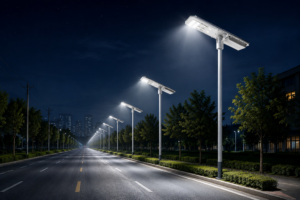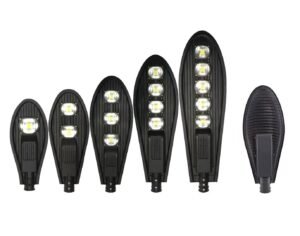
LED street light vs sodium is a comparison that every road project planner, municipal engineer, and contractor eventually faces. For decades, high-pressure sodium lamps dominated roadway illumination because they were affordable, reliable, and familiar. Today, however, LED street lighting has matured into a superior technology that reshapes how we think about safety, energy use, and long-term maintenance. Choosing between these two options is not just a technical detail; it directly affects budgets, sustainability targets, and the quality of light experienced by drivers and pedestrians every night.
Understanding the Two Technologies
High-pressure sodium (HPS) lamps produce light by passing electricity through a mixture of sodium, mercury, and other gases. They emit a warm, yellowish-orange glow that has defined nighttime roads for generations. LED roadway lighting, by contrast, uses light-emitting diodes—semiconductor devices that convert electricity directly into light with minimal waste heat.
This fundamental difference in how light is generated explains nearly every advantage and disadvantage discussed in the LED street light vs sodium debate.
Energy Efficiency: A Decisive Advantage for LED Street Lighting
Sodium lamps typically consume 70 to 150 watts per fixture, plus additional energy lost in the ballast. LED street lights deliver equivalent or better illumination while drawing 30 to 60 percent less power. For a municipality operating thousands of fixtures, that gap translates into substantial savings on electricity bills every month.
Beyond raw wattage, LEDs offer better optical control. Light is directed precisely onto the roadway rather than scattered in all directions, which means fewer fixtures or lower wattages are needed to meet the same lighting standards. This efficiency compounds the financial case for LED street lighting across large road networks.
Lifespan and Maintenance Costs
Sodium lamps generally last between 15,000 and 24,000 hours before output degrades noticeably. LED street lights routinely reach 50,000 to 100,000 hours while maintaining acceptable light levels. That difference matters enormously for road projects, where replacing a lamp often requires bucket trucks, traffic control, and skilled labor.
Fewer replacements mean lower maintenance budgets and less disruption to traffic. When you factor in the reduced need for emergency callouts caused by burned-out lamps, the total cost of ownership for LED street lighting becomes significantly lower over a ten-year horizon, even if the initial fixture price is higher.
Light Quality and Road Safety
Sodium lighting renders colors poorly. Under its amber glow, reds and blues appear muted or gray, making it harder for drivers to distinguish signage, pedestrians, and hazards. LED street lights offer higher color rendering and can be tuned to specific color temperatures, improving visual acuity and reaction times.
Better visibility contributes directly to road safety. Drivers detect obstacles sooner, pedestrians are more visible at crossings, and CCTV systems capture clearer footage. For projects prioritizing safety outcomes, LED roadway lighting is the stronger choice.
Environmental Impact
Sodium lamps contain mercury, a hazardous substance requiring careful disposal and creating risks if fixtures are damaged. LEDs eliminate mercury and reduce overall energy demand, lowering the carbon footprint of street lighting networks.
Additionally, LEDs can be paired with adaptive controls—dimming during low-traffic hours or brightening in response to motion sensors. Sodium systems cannot match this level of flexibility, making LED street lighting far more compatible with smart city initiatives and sustainability goals.
Upfront Cost vs Long-Term Value
The most common argument against LEDs is the higher initial purchase price. Sodium fixtures are cheaper to buy, which appeals to projects with tight capital budgets. However, this view ignores the complete lifecycle picture.
When you account for energy savings, reduced maintenance, longer replacement cycles, and lower environmental compliance costs, LED street lights typically pay back their premium within a few years and continue saving money afterward. For any road project intended to operate for decades, the long-term value strongly favors LED.
Practical Considerations for Road Projects
Retrofitting from sodium to LED requires attention to a few details. Existing poles and wiring can often be reused, but drivers and surge protection may need upgrading. Lighting designs should be recalculated to meet local standards rather than simply matching old fixture positions.
Choosing the right color temperature also matters. Very cool white light can cause glare, while warmer LED options (around 3000K to 4000K) balance visibility with comfort for drivers and nearby residents.
The Verdict
In the LED street light vs sodium comparison, LED technology wins on energy efficiency, lifespan, safety, environmental impact, and long-term cost. Sodium lamps served their purpose for decades, but they represent a legacy solution in a world demanding smarter, cleaner infrastructure.
For road projects today, specifying LED street lighting is not merely a modernization exercise—it is a financially sound, safety-focused, and future-ready decision that benefits municipalities, drivers, and the environment alike.