Solar street light autonomy is the time a system can operate without useful solar charging under a defined lighting schedule. Buyers often receive a claim such as ‘several rainy days’ without knowing the initial battery state, dimming profile or measured load. An acceptance test must define these conditions.
Write the operating profile first
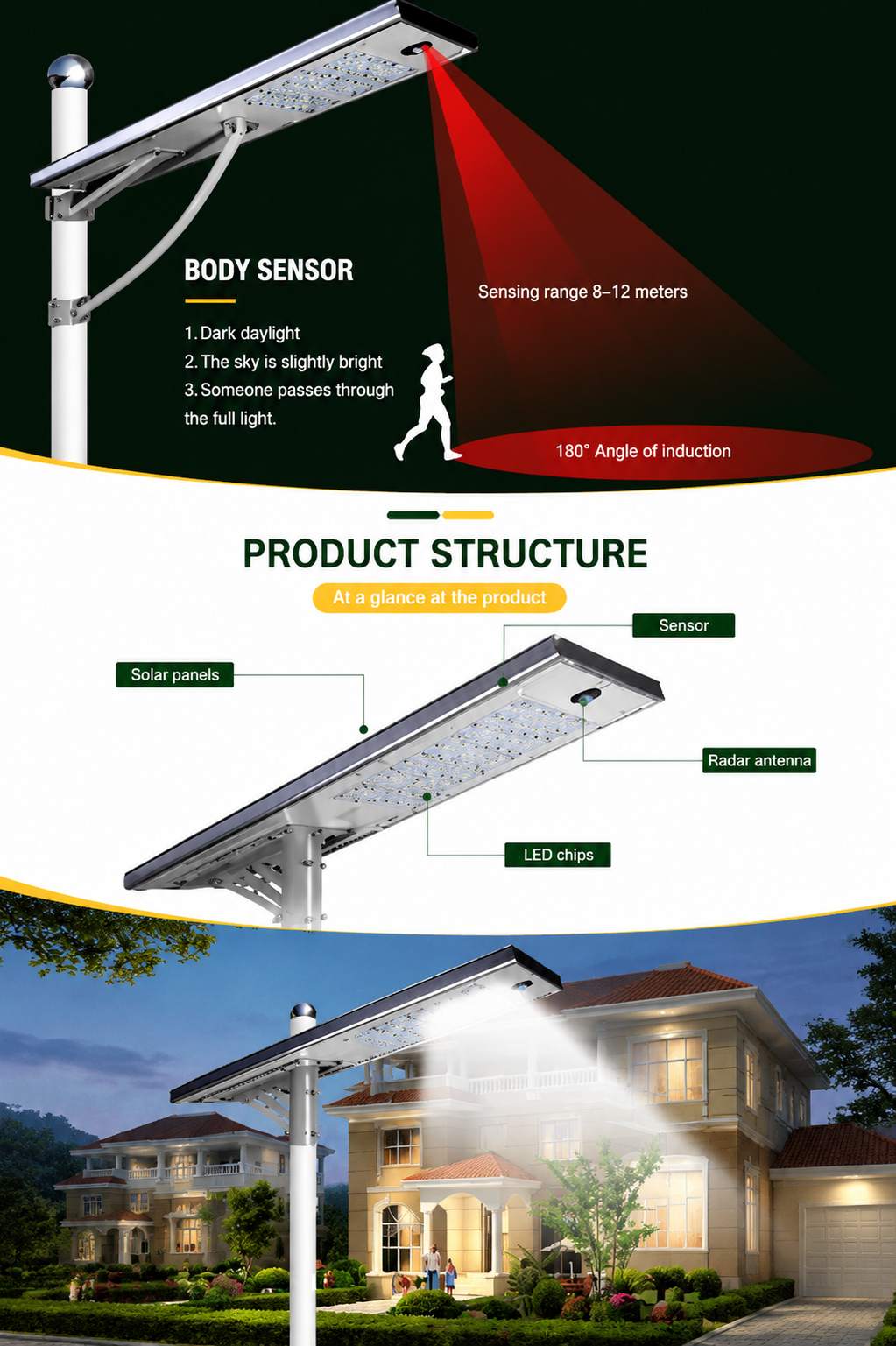
Specify when the light turns on, full-output periods, dimmed periods, motion-trigger behavior and any seasonal scheduling. Runtime at a low dimming level cannot be compared with runtime at continuous full output. For public tenders, the approved profile should be attached to the test record.
Record battery and controller conditions
Identify the battery chemistry, nominal voltage, rated energy, controller model and relevant protection thresholds using actual data sheets. Record the initial state of charge and temperature conditions. Battery usable energy can differ from the nominal rating due to protection limits, aging and environmental conditions.
Measure the actual electrical load
Verify the luminaire’s input power under the specified modes, rather than using a marketing wattage label. A practical energy estimate multiplies each mode’s measured power by operating hours, but real runtime also depends on conversion losses and battery limits. The test plan should say how these are handled.
Agree on pass/fail evidence
Document test setup, instruments, duration, lighting behavior, cutoff condition and any controller alarms. For field acceptance, include a recovery and charging check if specified. A laboratory demonstration may not represent worst-case local weather; site solar-resource assessment remains a separate engineering task.
EPC and importer RFQ checklist
- Approved nightly dimming schedule
- Battery and controller data sheets
- Initial battery condition and ambient temperature
- Measured power in each operating mode
- Runtime and protection-event logs
- Acceptance criteria and signed test report
Frequently asked questions
Is battery Ah enough to predict runtime?
No. Voltage, usable energy, load schedule and losses matter.
Does PIR dimming increase autonomy?
It can reduce energy use, but the benefit depends on actual activation patterns.
Can one sunny-day test prove rainy-season performance?
No. Solar resource, shading and seasonal energy balance must also be assessed.
Related buying guides
Real LED watts and battery Wh | Solar panel shading survey
Ask SUNLUX for a project quotation
Explore the relevant SUNLUX product range and send your project drawings, quantities, destination and technical requirements to sales@sunluxledlighting.com or WhatsApp +86 191 8978 2897. Product options and compliance evidence must be confirmed for the exact quoted model and project.