High mast buyers often compare two quotations using only steel weight, pole height and floodlight wattage. But the maintenance approach can change the equipment list and long-term cost substantially. Fixed and raising-and-lowering high mast systems should be evaluated as different maintenance strategies, not as interchangeable headframes.
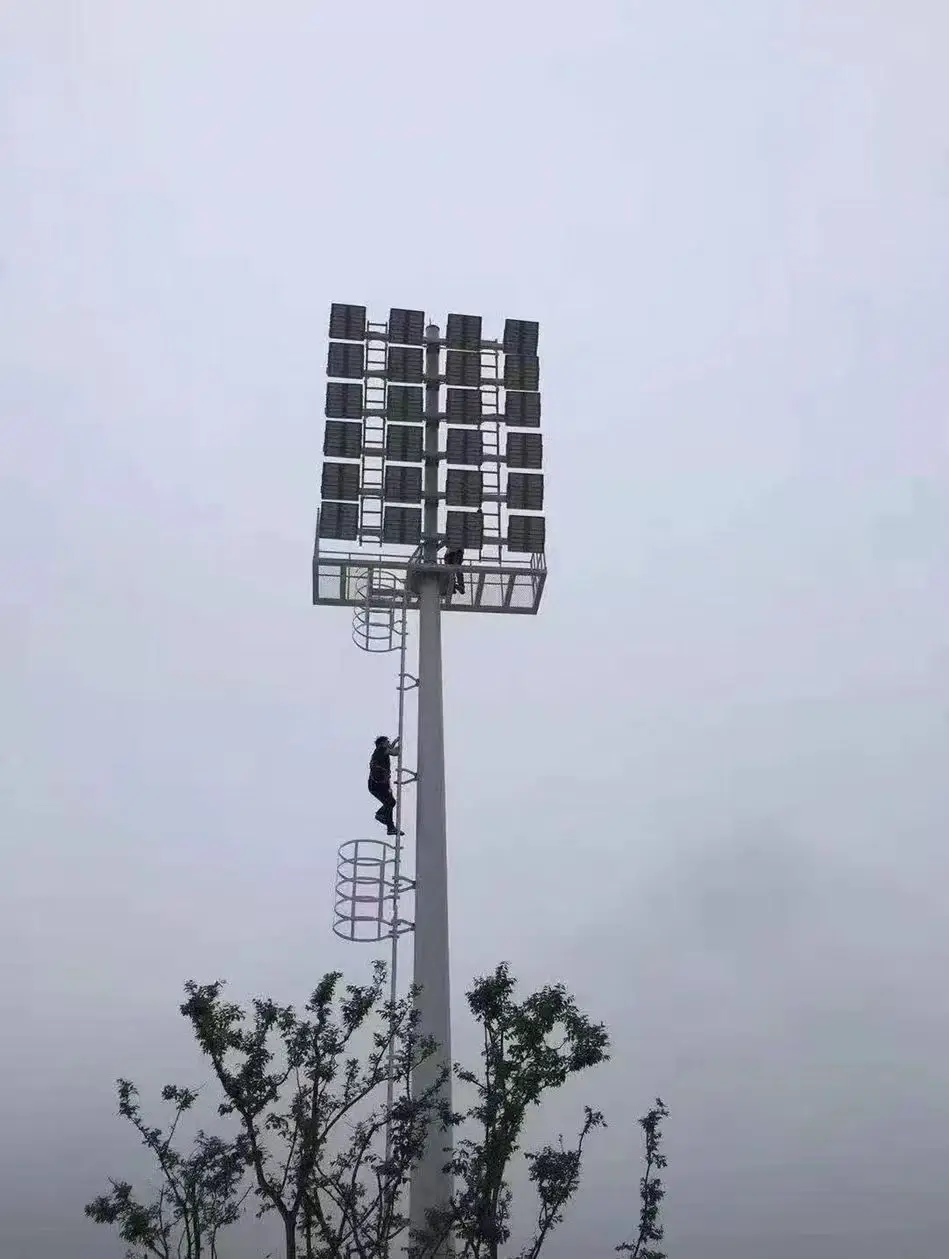
Fixed high mast lighting systems
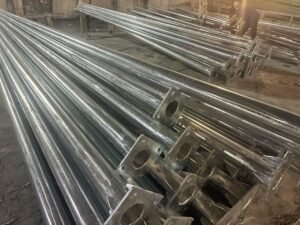
A fixed headframe holds the luminaires at the top. Servicing may require an engineered access ladder and platform or approved lifting equipment, depending on the site. The correct method must comply with the project safety plan and local regulations.
The pole, ladder, guardrails and access openings must be engineered together. A ladder shown in a drawing does not prove the access arrangement meets the local work-at-height requirements.
Raising-and-lowering systems
A lowering system brings the luminaire carriage down for maintenance using a winch and suspension mechanism. Typical system elements may include wire ropes, pulleys, guide components, electrical connections and a locking arrangement. These are system-specific parts and should be listed in the BOQ.
A lowering mechanism may reduce the need for high-level lamp access, but adds mechanical inspection and maintenance tasks. The winch and suspension equipment require documented operating instructions and periodic inspection.
Evaluate lifetime costs, not only purchase price
Compare installation equipment, routine cleaning, driver replacement, inspection intervals, site closures and traffic management. At a busy highway interchange, minimizing disruption can be a major benefit; at a site with convenient access equipment, a fixed design may be suitable.
Avoid claims that one design is always cheaper. A useful comparison models the expected maintenance frequency, equipment rental and labor cost for the actual site.
What to request in both quotations
- Structural design and approved pole drawing.
- Headframe type and luminaire mounting details.
- Access method and work-at-height safety requirements.
- If lowering: winch, ropes, pulleys, locks and spare parts.
- If fixed: ladder, platform, guardrails or specified lifting method.
- Electrical connection details and weather protection.
- Operating manual, inspection checklist and training scope.
Acceptance and handover
For lowering systems, witness a complete raise/lower operation under the specified commissioning procedure and inspect locking engagement. For fixed systems, verify access and safety provisions against approved drawings. Record who is responsible for future inspections and spare parts.
Frequently Asked Questions
Does every high mast need a lowering system?
No. Maintenance access and project economics determine the selection.
Is a fixed mast always simpler?
It has fewer lowering components, but safe access at height can be complex.
Can an existing fixed mast be converted to lowering?
Only after a competent engineering assessment and an approved retrofit design.
Request a Project-Specific SUNLUX Quotation
SUNLUX Lighting supports project-based lighting and pole procurement. Share your site conditions, quantities, drawings or BOQ for a technical review. Email sales@sunluxledlighting.com or contact WhatsApp +8619189782897. Configuration, performance and certifications must be confirmed for the selected model.
Related SUNLUX guides: High mast components guide, High mast shape and headframe types.