For an EPC contractor, a high mast pole quotation is not complete until the delivery plan is clear. A pole may be structurally sound yet arrive with damaged galvanized surfaces, missing anchor-bolt templates or sections too long for the agreed transport method. This guide focuses on the practical shipping questions that international buyers should settle before approving production.
1. Start With the Fabrication Drawing, Not a Container Guess
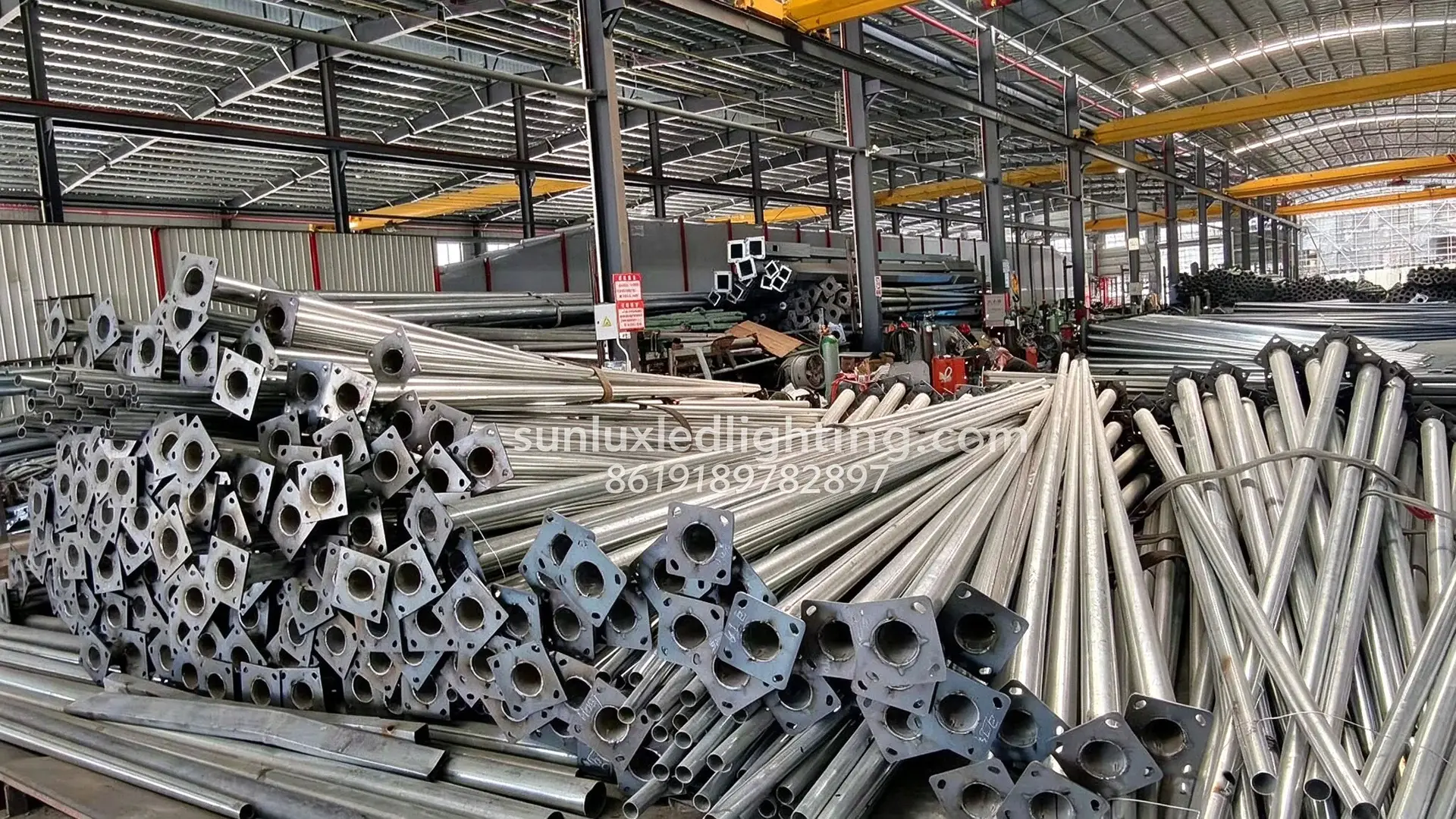
Request the shipping length of every pole section, not only the installed height. A multi-section mast can have overlapping slip-joint lengths, welded attachments and protruding flanges. The longest packed item determines whether a standard container, open-top equipment, flat rack or another shipping method needs evaluation. Confirm each section’s outside dimensions, actual weight, lifting points and center of gravity. The freight forwarder must approve the proposed loading plan and route restrictions; container counts cannot be estimated reliably from pole height alone.
2. Protect Galvanizing and Coating During Handling
Steel-to-steel contact can abrade protective coatings. Ask for separation pads, suitable supports and restraint points that avoid concentrated loads on thin pole walls. Painted surfaces need compatible wrapping and breathable protection where condensation may occur. Protect machined threads, removable doors, cable openings and mating surfaces. Packaging should be specified in the purchase order and checked before dispatch rather than improvised at the loading gate.
3. Identify Every Component in the Packing List
A high mast shipment can include shaft sections, base flange assemblies, a fixed or lowering headframe, floodlight brackets, ladders, platforms, guardrails, cable clamps, terminal boxes and electrical accessories. Foundation anchor bolts, nuts, washers and setting-out templates may ship separately. Give each crate and bundle a mark tied to the approved bill of quantities. If several poles share a container, label the components by pole number so installation crews do not waste time sorting parts at site.
4. Confirm Loading, Lifting and Unloading Responsibilities
The factory should provide a loading sequence and identify permitted lifting points. The carrier or qualified loading contractor must select restraints based on the cargo and transport mode. Confirm whether a forklift, crane, spreader beam or specialized unloading equipment will be available at destination. Never assume that the receiving contractor can safely unload long steel sections with ordinary warehouse equipment. Record the packing condition and cargo arrangement with dated photographs before the container is sealed.
5. Inspection Documents to Request Before Shipment
- Approved general arrangement and fabrication drawings with section marks
- Final packing list with package count, dimensions, net and gross weights
- Material and coating inspection records as required by the contract
- Accessory count and foundation hardware verification
- Photos of protective packing, labels and completed loading
- Commercial invoice, shipping terms and agreed handover point
- Installation instructions and any required lifting or assembly guidance
6. How to Compare Freight Quotations
Ask each freight provider to price the same shipment scope: port of loading, port of discharge, inland delivery if required, handling equipment, cargo dimensions and insurance responsibility. An FOB price does not include every destination charge. For oversized or unusually heavy components, route surveys and local permits may be needed. Treat container quantity as a planning estimate until the forwarder validates the packed dimensions and loading arrangement.
FAQ for High Mast Pole Importers
Can a 20 m high mast fit in a standard container?
Possibly, depending on the fabricated section lengths and packing dimensions. The installed height alone does not determine container suitability.
Should anchor bolts be packed with each pole?
They can be, but the essential requirement is clear package identification and a reconciled BOQ. Some projects ship foundation hardware earlier than the mast.
What is the most important pre-shipment check?
Match every packed section and accessory to the approved drawings and purchase order, then obtain loading approval for the actual cargo dimensions.
Request a Shipping-Aware High Mast Pole Quotation
SUNLUX Lighting manufactures customized lighting poles for overseas infrastructure projects. Share the pole drawing, project quantity, destination port and accessory list so our team can review fabrication and packing requirements before preparing a project-specific offer.
Email: sales@sunluxledlighting.com | WhatsApp: +8619189782897.
Related guides: High Mast Manufacturing Quality Checklist and High Mast Accessories and BOQ.