High mast floodlight aiming is a commissioning task, not a final adjustment made after the poles are erected. For container yards and large logistics areas, an EPC team should agree on target surfaces, luminaire orientation, maintenance access and measurement locations before ordering brackets or fixing the headframe layout.
1. Start with the yard operating plan
Map stacking rows, truck lanes, crane travel paths, gate areas and the positions where operators need to identify people or obstacles. Lighting requirements for these tasks can differ. A single average illuminance number does not establish safe visibility, acceptable glare or uniformity.
Ask the designer for a scaled plan with mounting coordinates, heights, intended floodlight orientation, maintained illuminance assumptions and any obstructions that could cast shadows.
2. Request a luminaire-by-luminaire aiming schedule
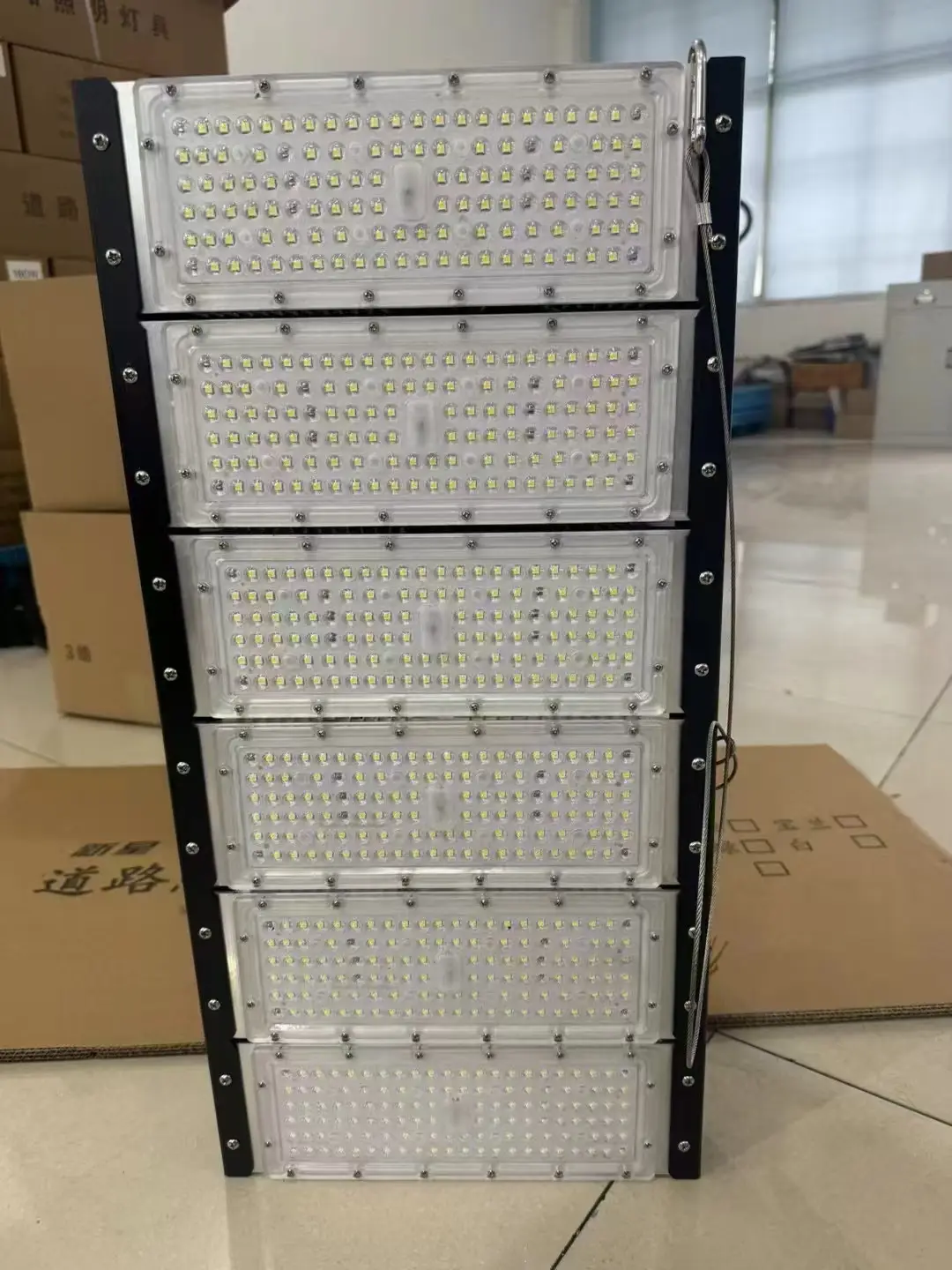
An aiming schedule should identify each pole, headframe position, fixture ID, optical distribution, horizontal direction and tilt. It should reference the exact photometric file for the proposed luminaire, not a vaguely similar wattage. Aiming must also respect the manufacturer’s mechanical tilt limits and mounting instructions.
Where a yard adjoins offices, homes or public roads, ask the designer to evaluate spill light and discomfort glare. A higher wattage alone cannot correct an unsuitable optical distribution.
3. Coordinate access before locking the layout
Confirm how each luminaire will be inspected and re-aimed after installation. Fixed and lowering arrangements create different maintenance procedures. Check that brackets, cables, access routes and the selected service method remain practical with the proposed aiming angles.
Read our fixed vs lowering high mast maintenance comparison and IES file verification guide before finalizing a purchase.
4. Commission with measurements, not photographs
Agree on a grid of test points, measurement height, operating conditions, stabilization time and acceptance criteria in the contract. Record actual aiming positions and any deviations from the approved lighting model. Commissioning photographs can help identify fixtures, but cannot replace calibrated measurements.
RFQ checklist for EPC contractors
- Scaled yard plan and operational zones
- Mounting height, pole positions and headframe arrangement
- Fixture-specific IES/LDT data and aiming schedule
- Target lighting criteria, uniformity and glare assessment
- Service access method and post-installation adjustment plan
- Commissioning measurement protocol and as-built records
FAQ
Can I specify only total watts per high mast?
No. Wattage does not establish where the light goes; ask for a photometric design and aiming schedule.
Should all floodlights have the same tilt?
Not necessarily. Tilt and orientation depend on fixture optics, mounting positions and the target grid.
What should be handed over after commissioning?
Keep the approved model, final aiming schedule, test results, fixture IDs and maintenance instructions.
Request a project quotation
Review SUNLUX LED high mast lighting products. Send your site plan and lighting criteria to sales@sunluxledlighting.com or WhatsApp +86 191 8978 2897. The final specification is subject to project engineering review.
Further reading: US DOE discussion of outdoor lighting glare.