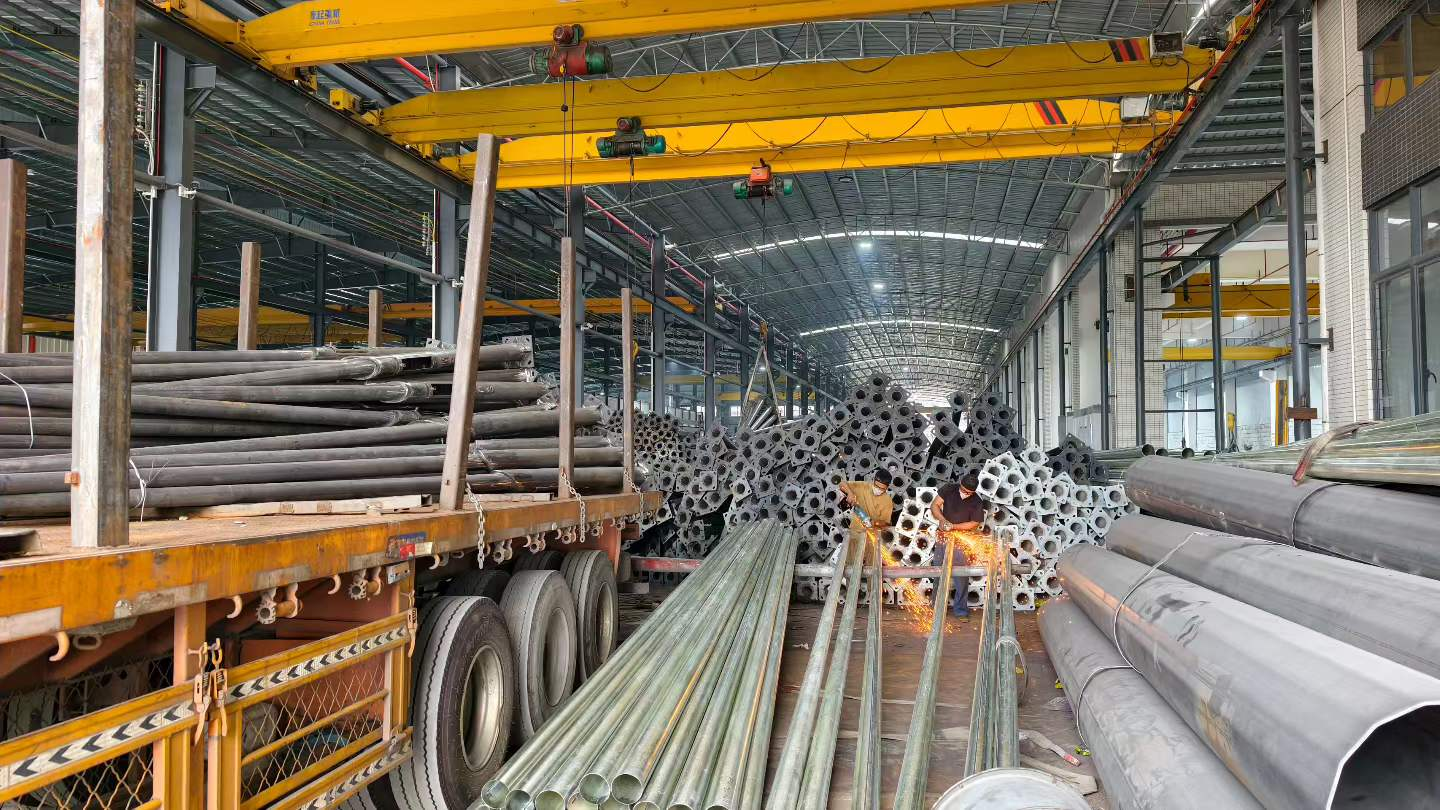
A high mast pole factory acceptance test (FAT) should convert the approved drawings and purchase order into a practical release decision. It is not enough to see finished poles in a workshop photo. EPC buyers need traceable records showing that the delivered sections, connections and accessories correspond to the agreed design.
Define the inspection basis before production
Issue the latest approved general arrangement, section drawings, bill of materials, coating specification and inspection and test plan (ITP). Identify witness points, hold points and who can release the goods. Without revision control, a factory can inspect the wrong drawing while the purchaser believes a different configuration was approved.
Check steel, welds and section fit-up
Request material identification and relevant mill certificates for the ordered steel grade. Inspect section geometry, flange dimensions, weld appearance and any specified nondestructive examinations against the contract requirements. For multi-section poles, check the approved joining method and any required trial assembly; do not infer a fit from photographs alone.
Inspect surface protection and critical interfaces
Review surface preparation, coating or galvanizing records and agreed inspection criteria. Confirm that base plates, bolt-hole patterns, access doors, cable openings and headframe interfaces match the drawings. The inspection method and acceptance tolerances should come from the project specification, not from an invented universal tolerance.
Verify accessories and release documents
Count the specified anchor-bolt sets, templates, nuts, washers, earthing provisions and access components. Confirm packing marks and section identification against the packing list. Record nonconformities and their disposition before authorizing dispatch. A signed FAT report should list inspections performed, results, exceptions and signatories.
EPC and importer RFQ checklist
- Approved drawing revision and ITP
- Material traceability and weld inspection records
- Section geometry, flange and interface checks
- Coating inspection and documented acceptance criteria
- Accessories count and packing marks
- Nonconformity closeout and signed release
Frequently asked questions
Does a factory photograph replace FAT?
No. Photographs support identification, but inspection records and the approved acceptance criteria determine release.
Is a trial assembly always mandatory?
Only where the agreed specification or risk assessment requires it. Define the scope before production.
When should the buyer sign the release?
After all contractual hold points and unresolved deviations have been addressed.
Related buying guides
High mast manufacturing quality checklist | High mast shipping checklist
Ask SUNLUX for a project quotation
Explore the relevant SUNLUX product range and send your project drawings, quantities, destination and technical requirements to sales@sunluxledlighting.com or WhatsApp +86 191 8978 2897. Product options and compliance evidence must be confirmed for the exact quoted model and project.